No one leaves a wedding at the same time.
The final car can be an image. It should not become another obligation. What matters is the soft landing around it.
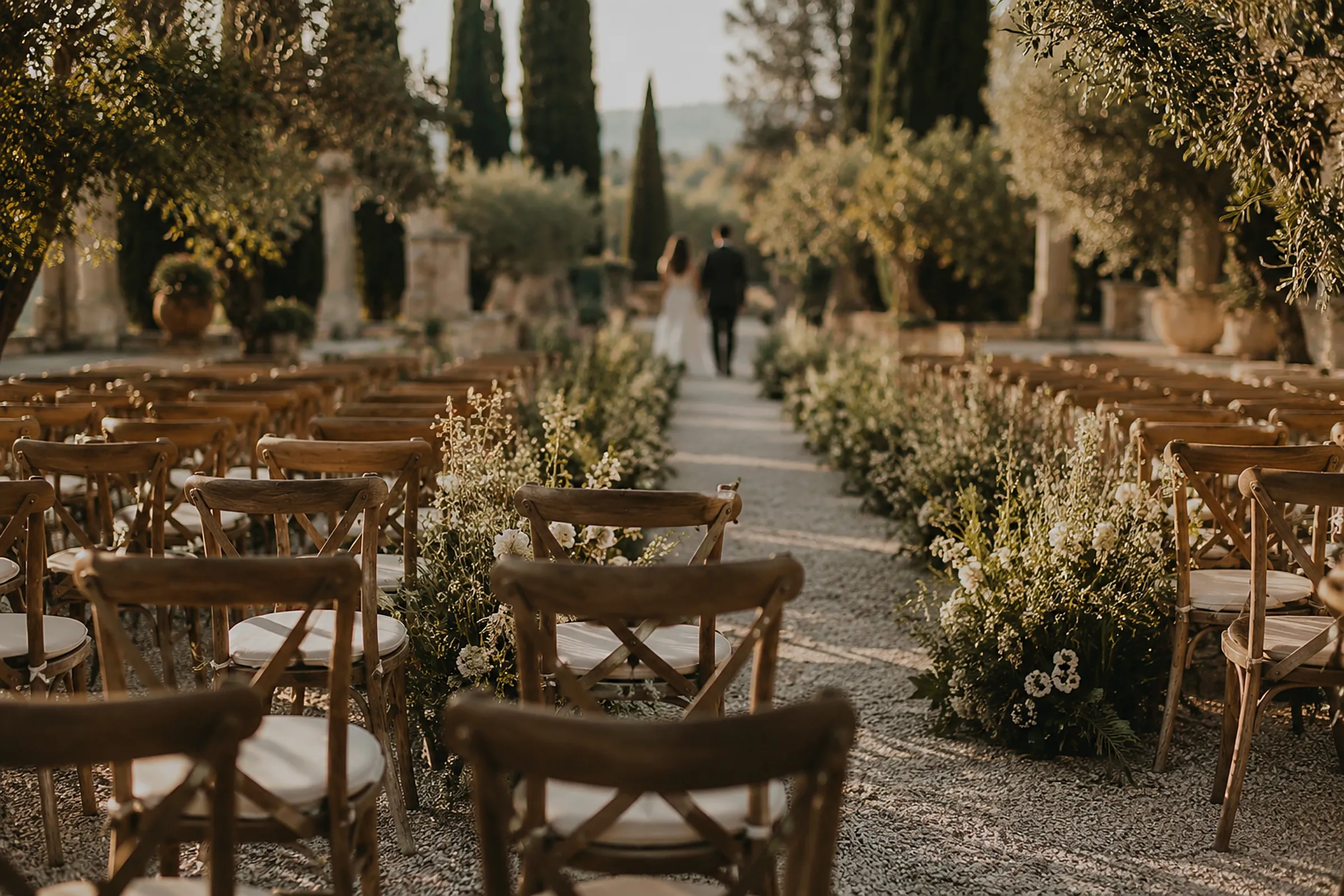
The final car can be an image. It should not become another obligation. What matters is the soft landing around it.
The official departure is one of the few wedding rituals that asks fatigue to be photogenic. By the time it arrives, guests have danced, sat through a long dinner, searched for coats, called home, worried about transport, found somebody’s bag, and begun saying goodbye several times. Then they are asked to form a line, stay awake for one more cue, and throw something in the direction of a car. The image can be lovely. The problem begins when the image is allowed to dictate the ending.
Actual departures are distributed events. A parent leaves quietly before the music changes. A couple of friends disappear because they have an early train. An aunt waits by the side entrance while somebody finds the driver. Two cousins keep talking on the stairs because they have not been in the same city for years. The couple may leave last, or they may vanish for fifteen minutes and return because the night has not finished with them. None of this makes the ending less meaningful. It makes it more accurate.
A graceful departure begins long before the car is visible. It begins with a transport plan that can absorb drift. It begins with a place for guests to wait that is warm, clearly lit, and close enough to the action that waiting does not feel like being discarded. It begins with a contact who can answer the simple questions: which car, which hotel, which person is still missing, who has the keys. These details are not beneath the emotional work of a wedding. They are the structure that allows people to leave with dignity.
The useful idea here is slack. Fifteen quiet minutes that belong to nobody in particular. A little extra time between the last song and the last coach. A late snack that does not have to perform for a camera. A room where the couple can sit down before being sent into another moment. Slack is not waste. It is the margin that prevents every small delay from becoming a crisis and every goodbye from becoming an extraction.
There is also an etiquette of release. The couple do not need to become the final checkpoint for every guest. A host can make clear, early enough, that people should leave when their night is done. A planner can protect the couple from the slow tide of practical questions. Vendors can have a handoff protocol that does not require a last-minute audience. The final car should be available to the people inside it, not only to the people watching.
In the first grey light, the venue looks briefly ordinary. The tables reveal their scaffolding. A wine glass has a lipstick mark. The last of the flowers seem almost embarrassed by their own persistence. This is not a failure of the night’s beauty. It is its consequence. The work of celebration has passed into work of another kind: clearing, counting, returning, remembering. The wedding changes custody.
Let the departure acknowledge this rather than deny it. Let the car be the last image if it wants to be, but do not make it the last obligation. The better ending may be smaller: a person putting a coat around another person’s shoulders; a driver waiting while someone says a final, unplanned thing; a couple in the back seat noticing, perhaps for the first time all day, that they are alone. That is release. It does not need a sparkler to prove it.
A final car should feel like release, not another cue.
Editorial note: A work of editorial fiction; people, places and makers are illustrative.
Filed under
This story is part of the permanent collection of Aura Stories — yours to return to, always.
The Issue
The Issue. Twelve weddings a year, in your inbox.
One dispatch a month — the weddings, the makers, the taste behind them. No spam, leave whenever you like.
The conversation
Comments
No comments yet. Be the first to write one.
Sign in to comment