At 9:47, the wedding became a night.
The exact minute is invented. The handover is not. A room can carry a ceremony, dinner, a performance and a party—but only if someone knows when to let it stop presenting itself.
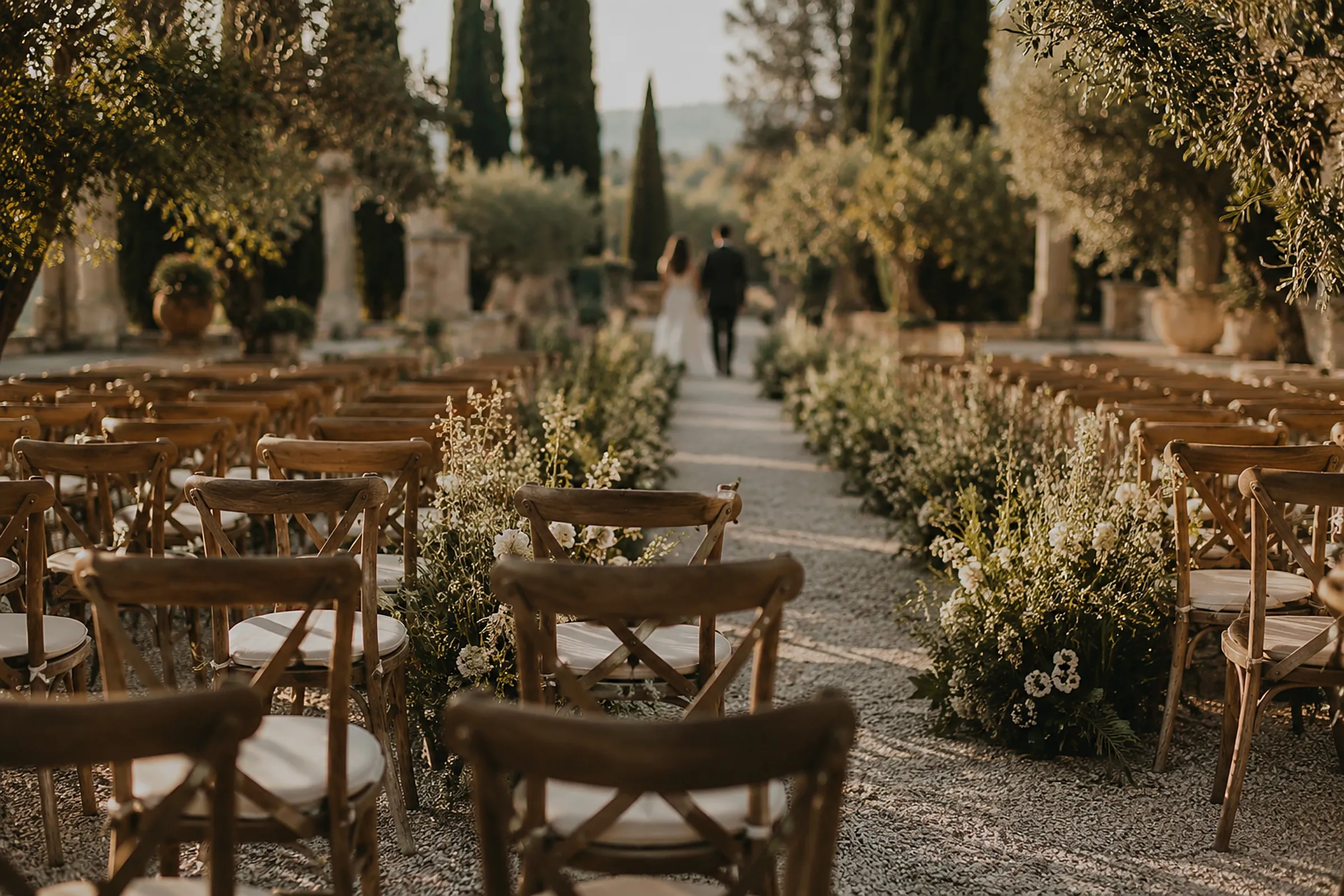
The exact minute is invented. The handover is not. A room can carry a ceremony, dinner, a performance and a party—but only if someone knows when to let it stop presenting itself.
At 9:47, a woman in a black dress takes off her shoes beneath a dinner table. Nobody notices at first. The band is still finishing a song that has become less a performance than a useful piece of weather in the room. At the far end, two friends lean over a place card to settle an argument about who met whom first. A waiter moves through with a tray of water, pauses at a chair that has been pulled too far into the aisle, and nudges it back without breaking stride. The candles have burned low enough that their light now catches the underside of faces. The room, which an hour ago was arranged for looking at, has acquired another function: it is holding people who have decided not to go anywhere yet.
Nobody schedules 9:47. A run-of-show may have a line that says ‘dancing’ or ‘after dinner,’ but the transition itself is more mysterious. It occurs when the room’s social contract changes. During a ceremony, attention is pooled. During a meal, it is distributed along tables. During speeches, everyone agrees to be still for a few minutes at a time. Then, often without an announcement, the forms relax. The couple is no longer the only reason people are gathered. The group starts to make smaller constellations around them.
This is a vulnerable point in the night. A wedding can be very beautiful and still fail to make the handover. You can feel it when a room has been asked to transform by command: the lights disappear, the music makes a hard left, the guests are summoned to ‘get on the dance floor.’ The result is not always disastrous. But it carries the faint anxiety of a presentation changing slides. People hover at the edge because the new version of the room has not given them a way in.
The more useful question is not how to create a peak. It is how to give the room a second job before anyone has to name it. In a restaurant, the best version of this may be as simple as a bar that remains open after plates are cleared, a corner where a new conversation can begin without competing with the whole table, a staff member who knows that the older guests will want the exit made more visible as the light drops. In a tent, it can mean that the dance floor is warmed in stages rather than revealed all at once, and that there are soft edges around it: chairs, water, a second place to stand, a path to the air.
One planner describes this as ‘giving the room a reason to exhale.’ She does not mean lowering standards. She means removing the feeling that every guest is being watched for the correct response. In practice, that often begins before dinner. The seating plan leaves a few deliberate gaps around tables rather than filling every inch with service. The music during the meal has enough lift to suggest that the evening is not over, but enough restraint to let conversations happen. The bar team knows when to reappear with water and new glassware. The couple have decided, in advance, which moment they are happy not to control.
That last decision matters. Couples are often asked to make their night legible to everyone else: first dance, cake, exit, every expected proof of delight. There is value in ceremony, and some rituals genuinely gather a room. But the pressure to manufacture a series of climaxes can turn the late evening into a relay race. The couple runs from one required emotion to the next while their guests wait for instructions. The room remains a stage because nobody has been invited to inhabit it differently.
The wedding that changes jobs most convincingly is not the one that abandons structure. It is the one that gives structure a quieter role. Consider the difference between a cake cut that clears the room and a cake cut that happens in the middle of conversation. The first may be photogenic; the second might be the beginning of a new table. Consider the difference between a first dance that requires every guest to form a perimeter and one that ends with the band inviting a few people close before anyone can decide whether they should. The second creates motion rather than observation.
At one dinner, the formal program ended with a toast just after nine. Nothing followed it immediately. This was intentional. The band continued to play, but not loudly. The host did not make another announcement. The room sat in the slight uncertainty that follows an ending, which turned out to be its own invitation. Someone went to the bar. A group of cousins began moving two tables together. The bride’s father found a seat near the terrace doors and became, for fifteen minutes, the person everyone came to speak to. When dancing began, it was not an event imposed on the room; it was the next useful thing to do with the people already gathered.
The scene is easy to romanticize, so it is worth saying what enabled it. There were enough chairs. The schedule had a little margin. The caterer had been briefed not to strip the tables the second dessert was served, because the candlelight and glassware were part of what made the space feel held. The coordinator knew that the older guests needed a transport update before they became anxious. The sound team had been asked to keep the microphone away from the dance-floor edge so conversations could remain in the room. None of these decisions appear in an image. Together they are the image’s condition.
A good late evening is full of small permissions. A guest can step outside without becoming ‘the person who left.’ A friend can take off their shoes without being made into a joke. A parent can go home early without feeling they have missed the essential part. Someone can stay very late because the night has made a place for them to sit down, eat something, and return. The party does not have to be maximal for this to work. In fact, scale can make it harder. What matters is whether the room offers several ways to belong at once.
This is why the transition into night is not an aesthetic effect. It is a social design problem, and a generous one. The architecture may change when the lights dim, but the deeper change is in attention. The room ceases to ask, ‘Are you looking?’ and begins to ask, ‘Are you comfortable enough to stay?’ That is a far more interesting proposition.
Later, the woman in the black dress will put her shoes back on. Someone will find a phone under a napkin. The band will play a final song that, by then, is not final at all; it is a gentle signal that the room’s next job is beginning. But at 9:47, before anybody knows they are crossing a threshold, the wedding becomes a night. The change is not announced. It is recognized in the body first.
A room becomes generous when it offers more than one way to stay.
Editorial note: A work of editorial fiction; people, places and makers are illustrative.
Filed under
This story is part of the permanent collection of Aura Stories — yours to return to, always.
The Issue
The Issue. Twelve weddings a year, in your inbox.
One dispatch a month — the weddings, the makers, the taste behind them. No spam, leave whenever you like.
The conversation
Comments
No comments yet. Be the first to write one.
Sign in to comment