Candles are not atmosphere. They are timing.
When the sky gives up, light becomes a form of hospitality—and someone has to be responsible for it.
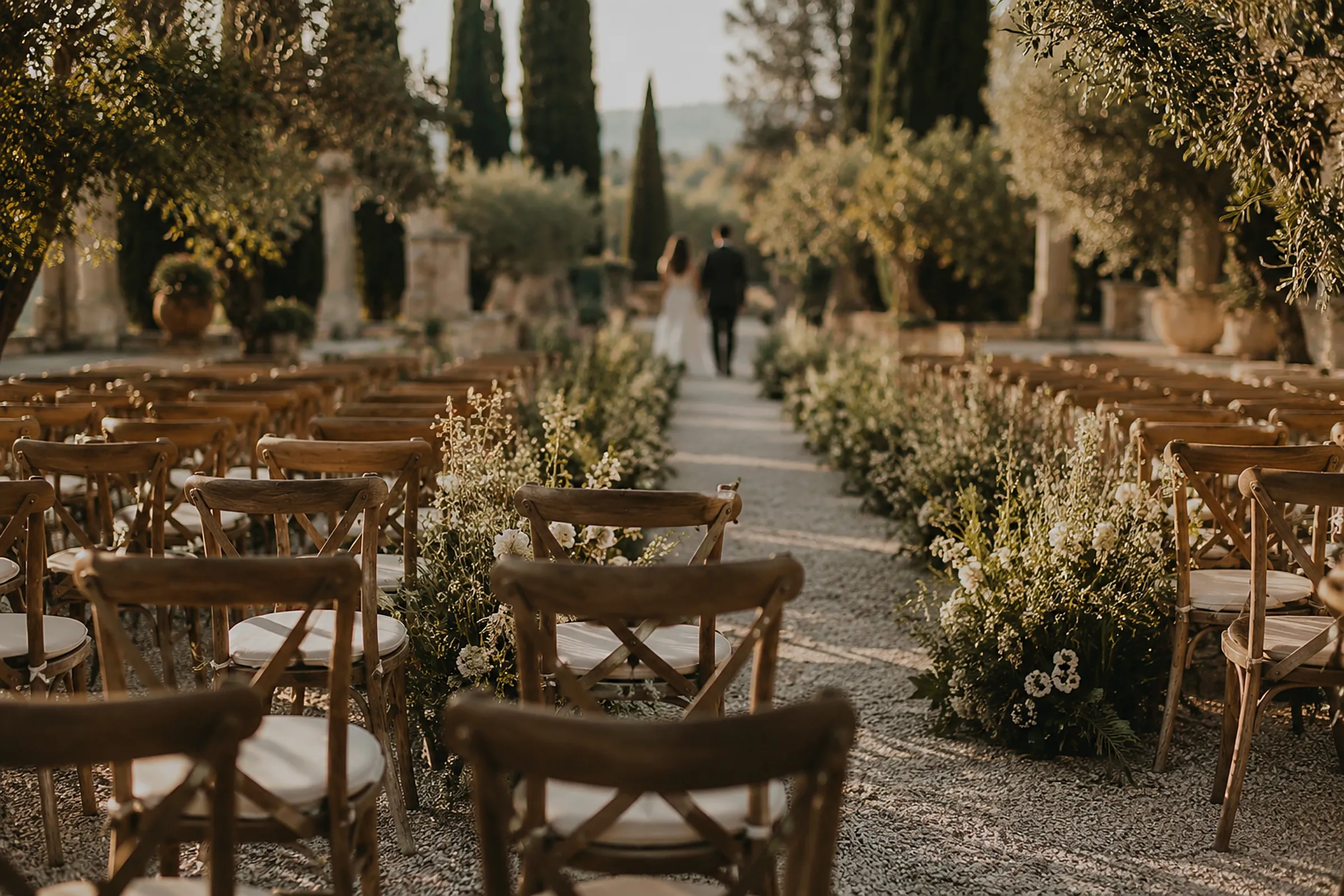
When the sky gives up, light becomes a form of hospitality—and someone has to be responsible for it.
At the end of a summer ceremony, the useful light goes faster than anyone expects. One minute there is enough to see the colour in the flowers; the next, a guest is asking where the nearest step begins. The florist is still moving a few stems. The photographer wants ten more minutes with the couple. A child is already asleep against a relative’s shoulder. The room has not become dark exactly. It has become selective. It asks the plan to decide what should be visible now.
This is why candlelight deserves more respect than the word ‘atmosphere’ allows. A table full of votives can look extraordinary, but the real work begins after the photograph. Can guests find their glass? Can a server see whether a plate has been cleared? Does an older relative know how to get to the washroom without feeling exposed? Where will the host stand when they need to answer a practical question? Light after dark is not merely decoration; it is information delivered gently.
The most useful lighting plans distinguish between three tasks. First, there is orientation: paths, steps, doorways, transport pickup points, the route to a quieter room. Second, there is recognition: enough warmth at a table to see faces and read a gesture without flooding the entire scene. Third, there is focus: the place where a toast, a band, a first dance, or an impromptu speech needs attention. Everything else is allowed to recede. The absence of light is part of the composition, but it cannot be a surprise.
What this requires is a handover. Not a vague instruction in a deck, but a person with a small remit at the moment daylight shifts: walk the paths, notice the wind, watch the flames, tell the sound team the room has changed, check the back entrance, make sure the transport point is not an accidental black hole. This person does not need to be a lighting designer. They need permission to make a decision without forming a committee.
The work is unglamorous in the best sense. A lantern moves three feet because a guest’s heel caught on a threshold. An exterior sconce stays on because the rain has made the paving uneven. A run of candles is extinguished because the breeze has become persistent. None of this contradicts the visual idea. It protects it. The difference between a considered night and a brittle one is often the speed at which someone can respond when the original plan meets the actual evening.
There is also a matter of energy. Many receptions become overlit at the exact point they are meant to become intimate, as though darkness were a technical failure. The answer is not less light everywhere. It is layered light: enough practical warmth to keep tables inhabited; concentrated pools where people gather; dimmer space at the perimeter where a private conversation can exist without becoming a performance. When every inch of a room is equally bright, every guest has to keep behaving as though someone is watching.
Candles are excellent at giving a room permission to soften, but they are poor at being the only source of truth. They move in drafts. They make beautiful shadows at the exact place someone needs to read a menu. They run out. The most convincing candlelit evenings use electricity as their quiet accomplice: an invisible wash on a stone wall, a low lamp by a station, a practical light at the bar, a warm glow at the exit. The goal is not to conceal the technology. It is to make it feel as though the room has always known what to do after sunset.
The final lesson is temporal. Light should change at the pace of the guests, not at the pace of a visual reveal. The best shift happens in increments: a little more warmth as cocktails lengthen; a clearer path as people begin to circulate; a slightly stronger band light when the first person starts to dance. It allows the eye to adjust and the room to acquire confidence. By the time anyone thinks to say it is night, the night has already arrived.
The point is not less light. It is a better response to where people actually are.
Editorial note: A work of editorial fiction; people, places and makers are illustrative.
Filed under
This story is part of the permanent collection of Aura Stories — yours to return to, always.
The Issue
The Issue. Twelve weddings a year, in your inbox.
One dispatch a month — the weddings, the makers, the taste behind them. No spam, leave whenever you like.
The conversation
Comments
No comments yet. Be the first to write one.
Sign in to comment