By morning, the night has become a rumour.
A closing piece
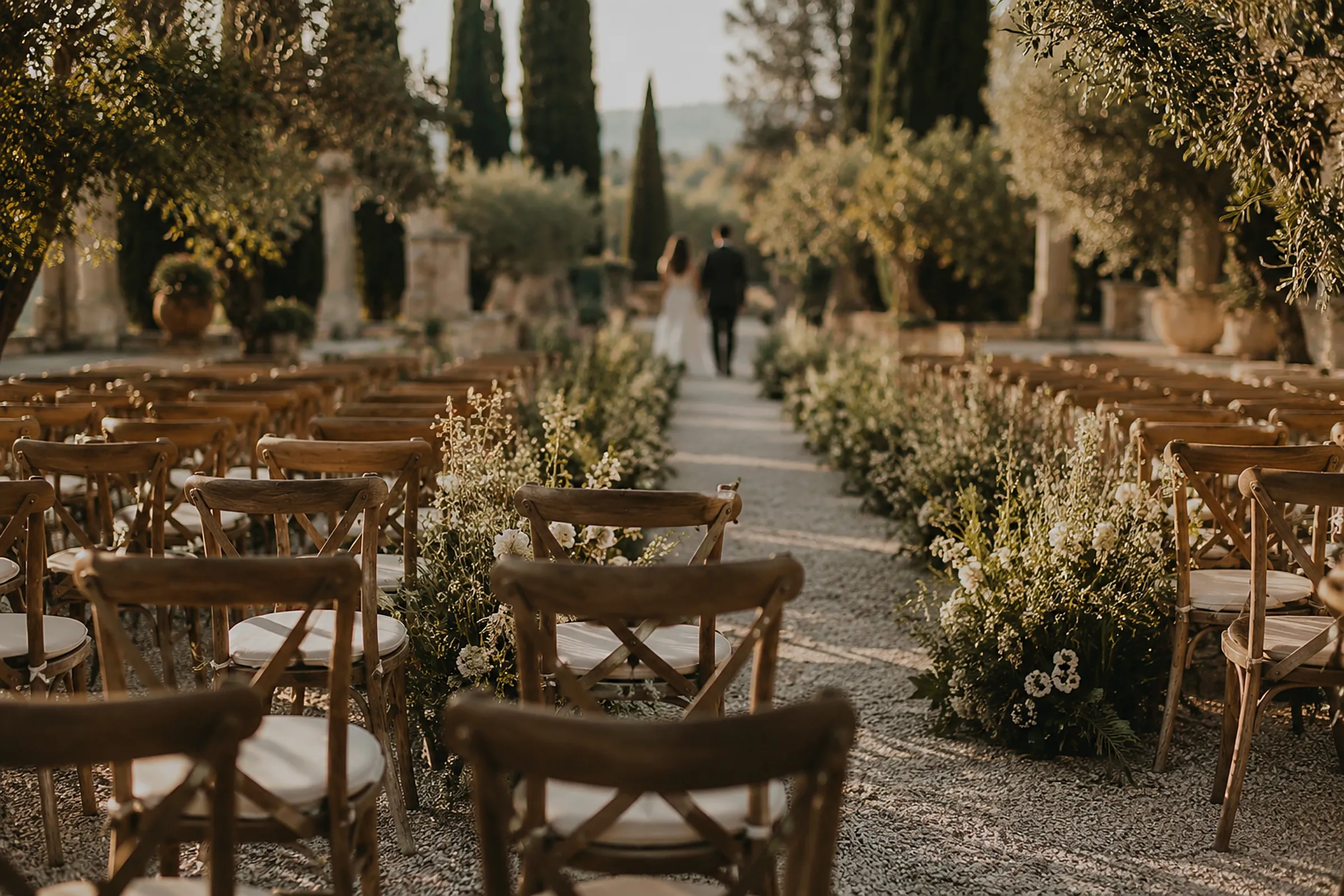
A closing piece
At 5:38, the car park has its own colour. Not blue exactly, not grey, but the colour of a night that has been asked to give up its last evidence. The gravel is wet. The service door is propped open with a crate. Inside, someone is counting glassware with the concentration of a person returning from a different country. The music has stopped so completely that the first sounds seem rude: a wheel on stone, a key in a lock, the click of a seat belt.
The couple are in the back of a car, or perhaps they are not. Perhaps they stayed at the venue longer than planned because a friend arrived late, because the photographer found one last view, because neither of them could yet decide how to leave the place that had held so many versions of them. The story of dawn is not that everybody has gone. It is that leaving finally becomes possible.
In the night, a wedding can feel endless because it has made time strange. There are no normal measures for the interval between a speech and a conversation that changes someone’s life. A dance can be three minutes or an entire childhood. A person can spend an hour sitting beside another person without either of them looking at a watch. This is part of what a celebration offers: not escape from time, but a different use of it.
Dawn returns the ordinary measures. There are invoices, room keys, a floral load-out, a vehicle that has to arrive somewhere else. The practical world has not been defeated; it has been waiting. But it comes back altered by what the night has asked people to carry. A parent will remember the exact point their child came off the dance floor and put a head on their shoulder. A friend will remember a sentence exchanged by the bar. A vendor will remember that the host asked whether they had eaten. These details are minor only until they become the story.
This is why a wedding should not be judged by whether it looked perfect at its brightest point. Perfection has a short memory. What lasts is the quality of attention that moved through the room after the official record stopped. Did people have somewhere to go when they were tired? Did the people doing the work feel held? Did the couple have a moment that belonged only to them? Did the last car leave because it was ready, not because the schedule demanded a final picture?
The room will be cleared. The candles will be stubbed out. A ribbon will be found under a chair. By afternoon, photographs will begin to arrive: sharp, blurry, unexpectedly funny, beautiful in a way that does not quite match the memory. Keep the imperfect ones. They carry more than a face or a flower. They carry the fact that the night had a body, and that the body eventually had to rest.
Tomorrow is not the opposite of the night. It is the place where the night changes form: into messages, stories, logistics, a pair of shoes left in the wrong car, a receipt folded into a pocket, a feeling that returns without warning when the light is low. The last car disappears. Morning opens its door. What happened does not close behind it.
Editorial note: A work of editorial fiction; people, places and makers are illustrative.
Filed under
This story is part of the permanent collection of Aura Stories — yours to return to, always.
The Issue
The Issue. Twelve weddings a year, in your inbox.
One dispatch a month — the weddings, the makers, the taste behind them. No spam, leave whenever you like.
The conversation
Comments
No comments yet. Be the first to write one.
Sign in to comment