What We Could Not Say
A wedding contains an enormous amount of speech. The harder question is what belongs in the room, what belongs in a letter, and what must wait until nobody is applauding.
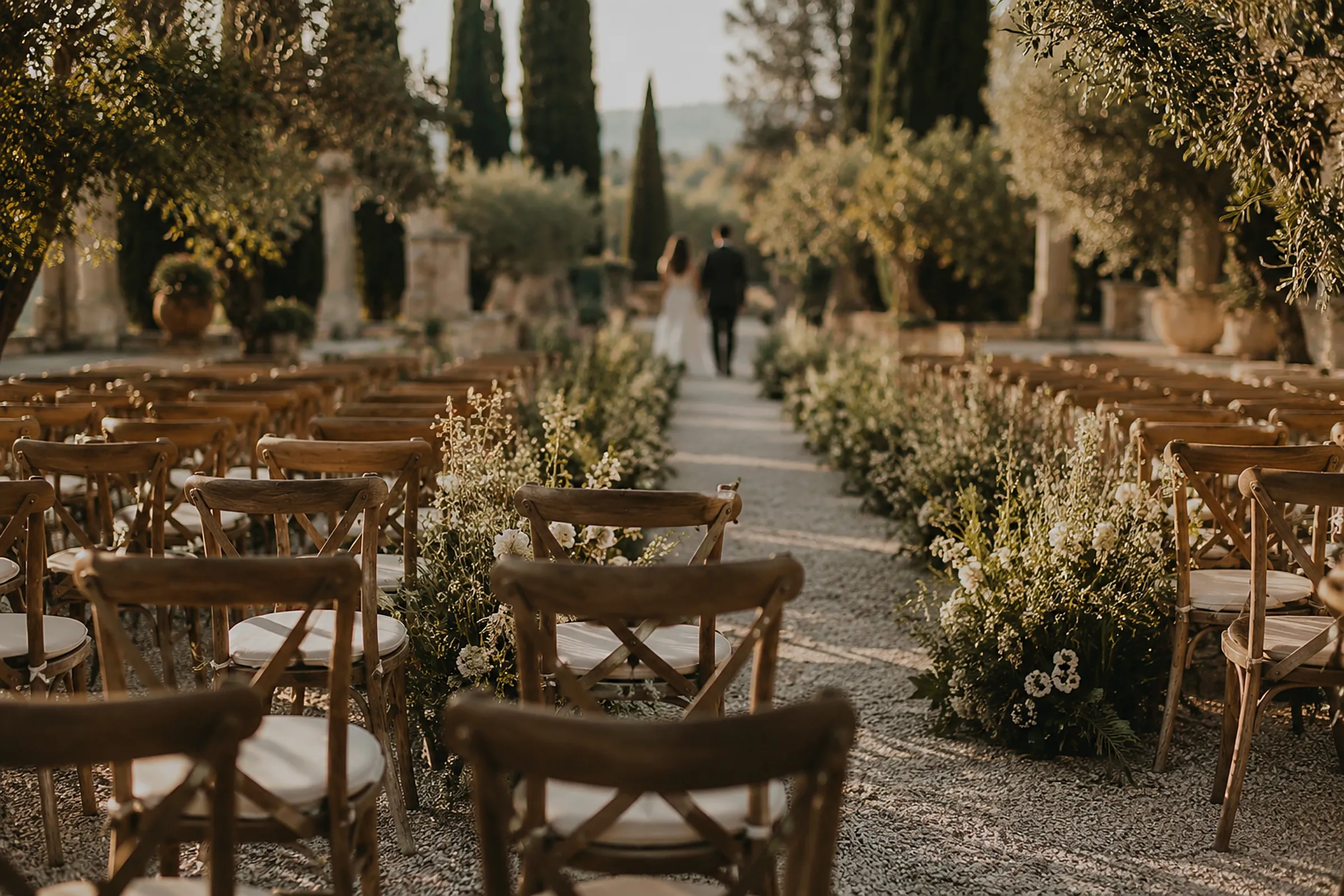
A wedding contains an enormous amount of speech. The harder question is what belongs in the room, what belongs in a letter, and what must wait until nobody is applauding.
The bathroom was the only room in Lana’s apartment with a door that closed and a mirror that did not distort her face. On the Tuesday before her wedding, she stood there in a silk robe she had bought for photographs and did not especially like, holding an index card at chest height. Her first draft began with a memory about an airport. Her second began with a list of objects: a cracked phone charger, a yellow mug, the blue suitcase they had carried through three apartments. By the fifth draft, all the objects were gone and the card said only: “I did not think I could be known without becoming less difficult.” She read the sentence aloud once. Then she put the card under the sink, behind the spare soap, as if language could be stored until it had better manners.
There are wedding sentences that know exactly where they belong. Welcome. I do. To the couple. Thank you for coming. They have the functional grace of well-made furniture: they hold weight because the room understands their job. Then there are sentences that make a room hold its breath. I forgive you. I was lonely. I do not know how to be your child anymore. I am afraid this will change us. Such sentences may be true, even urgent. They are not automatically ceremonial. A wedding is not an ethics-free zone, but it is also not a neutral container for every unsettled thing a family has been carrying.
A public vow can mark a direction. It cannot complete the conversation that made the direction necessary.
The temptation to use the ceremony as a clearinghouse is understandable. Weddings convene people who may otherwise avoid one another. They create an atmosphere in which feeling is expected and tears are socially permitted. A person who has spent years being told they are too much may look at a microphone and think: now, finally, there will be no punishment for saying the whole thing. But the room’s permission is uneven. A parent called out in a toast cannot choose their response. A partner surprised by a vow cannot take time to understand it. Guests who know only the surface of a history become accidental jurors.
Lana’s partner, Maya, had written three pages. Maya loved a speech and had grown up in a family where every meal became an opportunity to recall who had done what for whom. Her pages were funny at first: the airport, the missed train, the night they assembled a bookcase wrong and refused to admit it. Then the pages changed. There was a paragraph about the year Lana stopped speaking to her older brother. Another about Maya’s mother, who had initially called their engagement “a phase of enthusiasm” before apologizing months later. Maya did not know whether to include those histories as evidence of survival or leave them private as an act of mercy.
They read their drafts to each other at the kitchen table. This was not a performance. Lana stopped twice to correct a date. Maya crossed out a joke that sounded cruel when heard by the person it was about. When Lana reached the line from under the sink, Maya said nothing for a long time. Then she asked, “Do you want to say that to me, or do you want other people to hear you say it?” It was a difficult question because the answers were not opposites. Lana wanted Maya to hear it. She also wanted the room to understand that the bride who appeared calm had spent years learning to make herself easy to keep.
They made two piles on the table. In one: vows, a reading from a friend, the story of the bookcase, a sentence about choosing one another when neither was convenient. In the other: the sentence about difficulty, the brother, the mother’s apology, a note Lana had written to her father and never sent. The second pile was not rejected. It was assigned a different kind of time. Lana put the note to her father in an envelope addressed but unstamped. Maya gave her mother a letter the morning of the wedding and told her not to answer it until the next week. It was not an ultimatum. It was a request for a conversation without formalwear.
The distinction between a vow and a letter is not a hierarchy. A vow asks to be heard by witnesses because it establishes a commitment in public. A letter lets a person control pace, return, revision, and silence. The person receiving it can fold it, put it down, cry without managing an audience, answer after sleep. For people whose families communicate through implication, the letter can be a way to bring a sentence into daylight without forcing everyone into the same minute. For people who have been harmed by written words, it may be the wrong form entirely. The point is not that letters are better. The point is that format changes what an honest sentence can do.
At the ceremony, Lana used none of the language she had hidden. She said that Maya had taught her the difference between being admired and being understood. She said that their home had room for disagreement, which was a promise of its own kind. Maya said that she would not make Lana perform gratitude for care she had earned. Neither woman mentioned the brother or the mother or the note. Their friends heard the shape of the history without being recruited into its details. Later, one guest said the vows were beautiful. Lana said thank you, which was true, but not the whole truth.
The letter to Lana’s father stayed unstamped for three months. In October, after a phone call that went badly, she found it in a drawer and read it again. Some of it still felt right. Some of it sounded like a person trying to win a case. She rewrote the first page. She never used the wedding as the deadline for that conversation again. This was perhaps the most useful thing the ceremony had given her: proof that a public beginning did not obligate every other relationship in her life to resolve itself by dessert.
On their first anniversary, Lana and Maya opened the envelope containing the original vow drafts. They had saved the crossed-out jokes and the pages that were too raw to read aloud. Lana found the index card from the bathroom. The sentence had faded where water had touched it. Maya asked if it was still true. Lana thought about the question. “Less than it was,” she said. Then, after a pause: “Enough that I need to keep telling you when it comes back.” Maya nodded. Nobody applauded. The room they were in was their own kitchen. The dishwasher was running. The door to the bathroom stood open.
This is a fictional composite. The letters, family histories, and ceremony are invented. It is not advice for disclosure, reconciliation, or family mediation.
Story scenes: Fictional composites; all people, private letters, and relationship details are invented
Filed under
This story is part of the permanent collection of Aura Stories — yours to return to, always.
The Issue
The Issue. Twelve weddings a year, in your inbox.
One dispatch a month — the weddings, the makers, the taste behind them. No spam, leave whenever you like.
The conversation
Comments
No comments yet. Be the first to write one.
Sign in to comment