The thing that follows.
A note from the editor
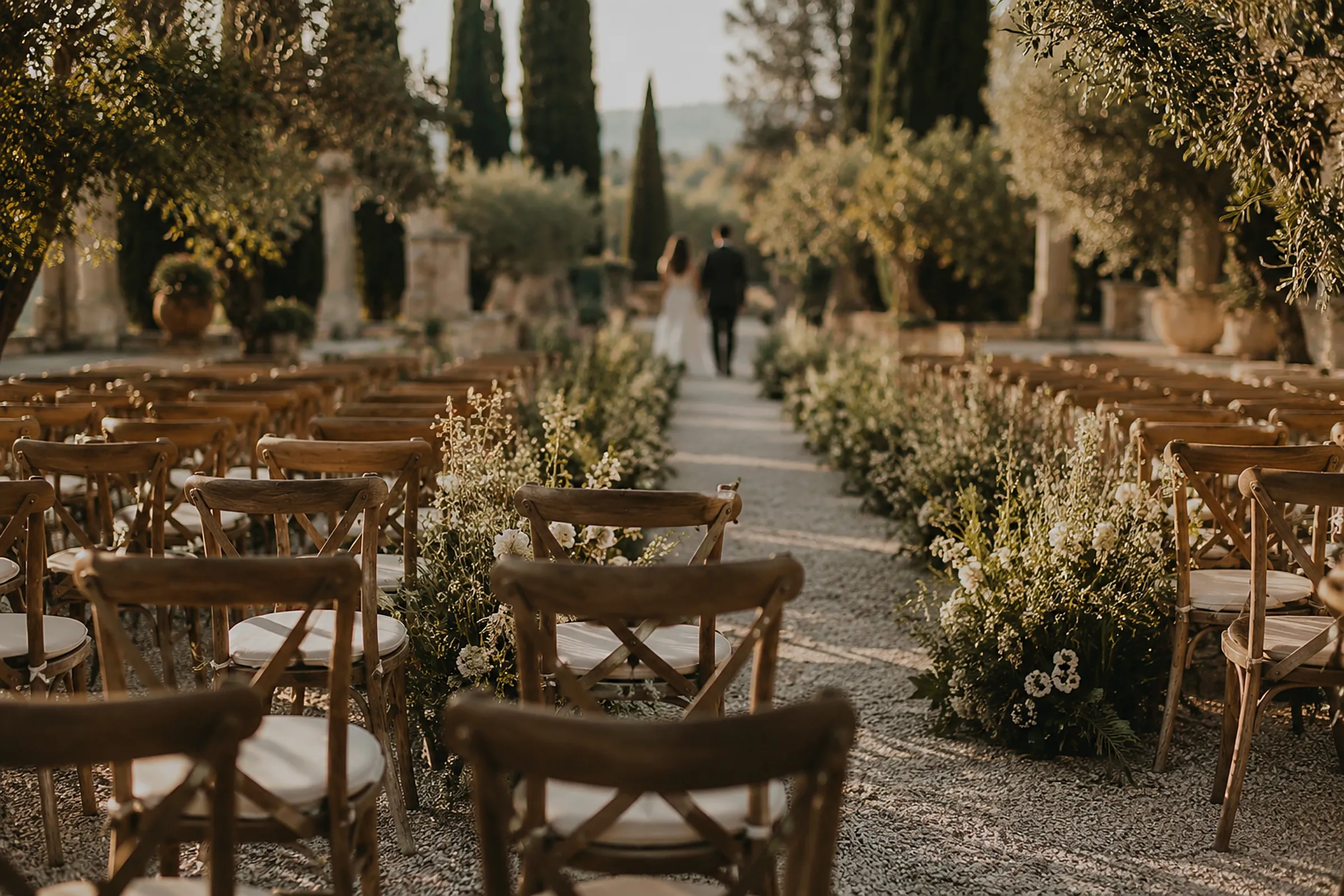
A note from the editor
At 7:12 on a Monday morning, a woman we will call R. sent the group chat a photograph of a blue notebook lying open on a kitchen table. The page held four lines, crossed out so firmly that the pen had raised the paper. “I have no vows,” she wrote beneath the picture. The wedding was thirteen days away. Her best friend replied with three heart emojis, then a practical question about a dress fitting. Her sister suggested an old poem. Nobody asked what the crossed-out lines had said. Later, R. told us she was relieved. The lines had not been bad. They had simply made a promise sound like a conclusion, and she had begun to suspect that conclusions were not what she had to offer.
Wedding language is often asked to perform a strange compression. It must be private enough to feel true, public enough to reassure a room, brief enough to survive a ceremony schedule, and large enough to contain years that have not happened yet. The result is a genre full of clean sentences that sometimes obscure the more difficult work: two people deciding what they can honestly claim, what they cannot yet say, and who else needs to understand the terms of the life being made around them. A promise is not diminished by limits. In fact, it becomes legible there.
This edition began with a narrow question: what changes when a promise is witnessed? We do not mean merely watched. A guest list is not a moral ledger, and no number of witnesses can guarantee a marriage against illness, money, boredom, family conflict, or grief. Witnessing is more precise. It means somebody else receives an account of what was said and, perhaps, what was avoided. It means a legal record may be signed, a parent may hear a new form of address, a friend may notice when a couple has stopped laughing in the same way. It means a private arrangement enters a social field.
That field can be tender; it can also be demanding. Families sometimes bring inherited ideas of what a wedding should prove. A civil ceremony can be dismissed as too small. A large gathering can be treated as an obligation. A religious ritual can carry spiritual meaning that an outsider cannot reproduce with the right flowers. A name change, a ring, a meal, an order of speakers—each may be read as a message by people who are already listening for one. The work is not to turn every expectation into a problem to solve. It is to decide which expectations deserve a conversation, which deserve a boundary, and which belong to a history the couple does not need to keep reenacting.
We have tried to keep the difference between fiction and context clear. The central scenes in these pages are fictional composites. Their people are invented; their letters, arguments, pauses, and kitchen tables are not reportage. They give us room to stay close to the stakes without making a spectacle of a real couple’s private life. The cultural notes are another kind of work. They use linked institutional or community-led sources and resist turning living traditions into symbols that can be lifted free of their practitioners. A marriage contract in a museum is not a design prompt. A sacred fire is not a metaphor waiting to be borrowed. The point of looking carefully is to become less careless.
There is also the matter of form. Legal systems have their own language for marriage, and it is neither romantic nor trivial. In New York City, for example, the City Clerk sets out a particular sequence: a license, a waiting period, a ceremony, signatures from the couple, officiant, and witness or witnesses, then registration. Other jurisdictions do things differently. The detail matters because law can convert a sentence into a set of rights, responsibilities, records, and names. It is one answer to the question of what a promise becomes when it is witnessed. It is not the only answer, and it is not an answer everyone seeks. But it is real enough to change what paper has to be carried home.
R. eventually wrote one line in the notebook without crossing it out: “I will tell you when I am afraid, before fear makes me unkind.” It was not the kind of sentence that gets applause in a room full of people who hope for polish. It had no sweep. It could not be framed above a mantel. It named a practice, not a fate. Her partner wrote something equally unglamorous: “I will not mistake your pause for an answer.” They did not read either sentence at the ceremony. They read them to each other on a train the next day, when there was no audience and both were too tired to make the moment impressive.
That distinction runs through the issue. The public ceremony gives a promise a shape others can recognize. The private commitment gives it somewhere to go after the chairs are stacked and the flowers begin to brown. Between them is a life made of repeating situations: a call to a parent, a form with the wrong field, an argument over money, a sick child, a borrowed car returned with an empty tank, a friend who needs a bed for the night, a ring removed before kneading dough. The words matter because they can orient this life. They fail when they pretend to replace it.
Attention is the closest thing this subject has to a method. Ask what you would want a trusted person to remember about the day you made a promise: perhaps not the flowers or even the exact sentence—just the way you looked at one another before you began.
Story scenes: Fictional composites; all people, private letters, and relationship details are invented
Filed under
This story is part of the permanent collection of Aura Stories — yours to return to, always.
The Issue
The Issue. Twelve weddings a year, in your inbox.
One dispatch a month — the weddings, the makers, the taste behind them. No spam, leave whenever you like.
The conversation
Comments
No comments yet. Be the first to write one.
Sign in to comment