Before the first guest, there is already a room full of care.
A kitchen dispatch from the hour before a wedding becomes visible—when the work is still honest, the air still cold, and every promise of the evening has to be carried by hand.
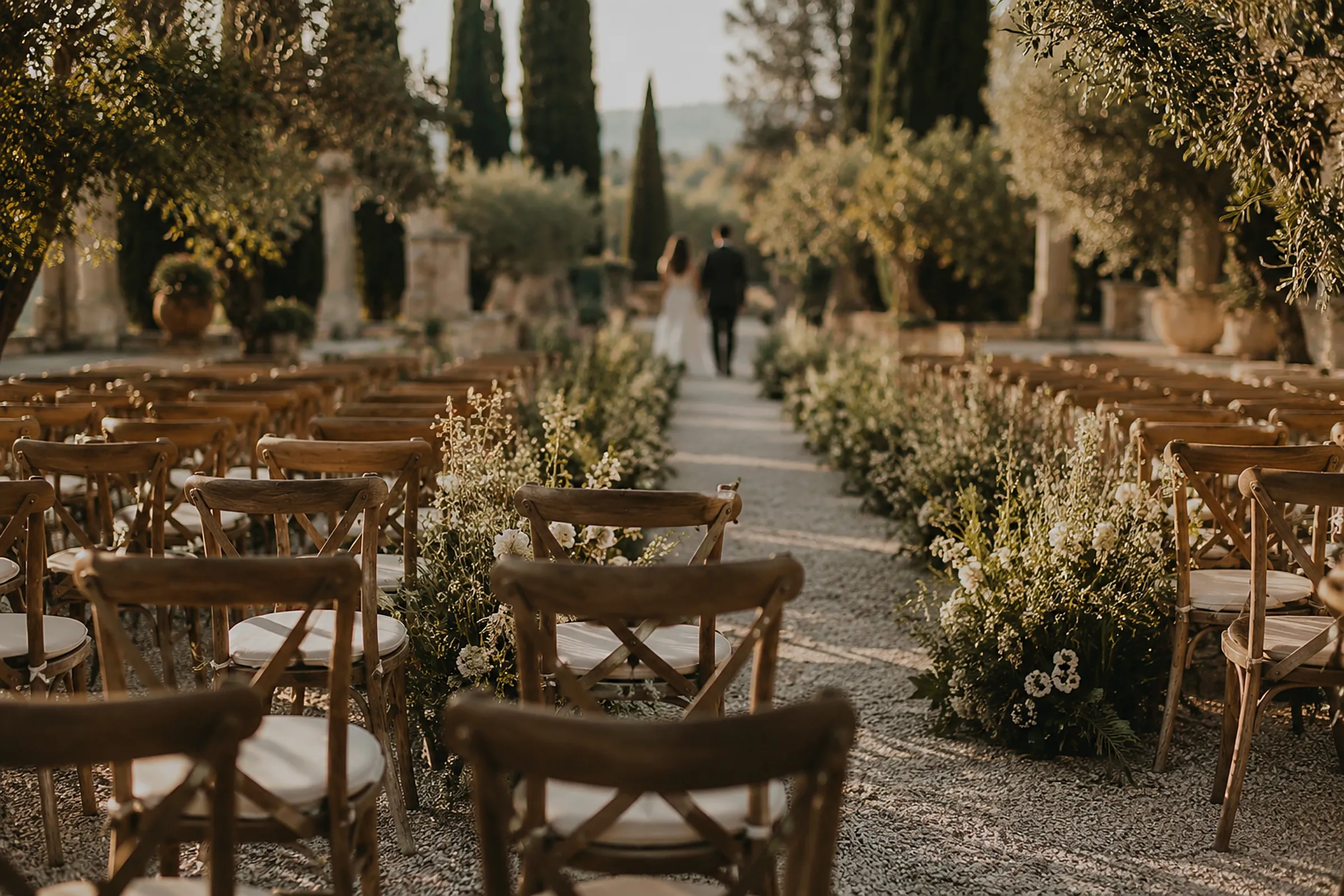
A kitchen dispatch from the hour before a wedding becomes visible—when the work is still honest, the air still cold, and every promise of the evening has to be carried by hand.
At 05:47, the kitchen is a blue room. Not blue in the decorative sense. Blue from the square of morning gathering behind the high windows; blue from the light that makes stainless steel look stern; blue from the hands of the porter who has just come in from the loading bay. The old building is still holding its breath. Upstairs, hundreds of chairs are stacked with their backs toward the wall. In the courtyard, the long tables are only timber and folded linen under protective covers. Down here, the first onions are going into butter.
Mara, the head chef in this composite scene, keeps a small pencil tucked behind one ear. She uses it to write two words on the back of the prep list: fewer flowers. The crates that arrived with the produce have brought a little too much green into the kitchen; the stems are beautiful, but they are beginning to colonise every work surface. A wedding has a way of asking for more than a room can comfortably hold. Mara knows that the last-minute skill is not always adding. Sometimes it is removing a branch so the cook plating vegetables can see the pass.
The first task is not cooking. It is orientation. Someone reads the service schedule aloud once, then again more quietly. Sixteen guests are vegetarian. One guest has a severe nut allergy. A table of three will arrive after the ceremony because the eldest aunt cannot manage the gravel path quickly. The couple want the bread placed after the first speech, not before. A photographer needs five uninterrupted minutes near the cake. The dishwasher has been delayed by traffic. Every fact is small. Together they are the weather system of the night.
A good kitchen does not treat these details as inconvenience. It treats them as the actual medium. Ingredients matter; timing is also an ingredient. A brilliant dish served to a person who has been waiting too long becomes a different dish. A vegetarian plate announced at the table becomes a different plate. A perfect piece of fish delivered while somebody is standing up to toast their parents becomes a different meal. Service is the art of holding food, people, and time in the same frame without letting anyone feel managed.
By 06:30, the stock is moving. It has a low, private sound, like a room beginning to speak in another room. The baker is folding dough with the heel of one hand. A commis takes the first tray of pears from the cool room and finds one of them bruised deeply on one side. She keeps it. There is a tendency to think a feast is made from the most beautiful versions of things. In fact, a kitchen is often defined by its relationship to what is imperfect. The pear will become a purée. The end of the herb bunch will season the staff meal. The sauce that catches will be caught before it burns, because someone was listening.
The staff meal begins as a question around 09:00. It is not glamorous, which is why it is revealing. Who will be feeding the people who feed everyone? The answer determines more of the evening than an elaborate welcome drink ever could. A hungry team moves differently. A team that has been asked to eat standing up, late, from whatever is left moves differently. There are practical reasons to feed people well: energy, focus, morale. There is also an ethical one. The guests’ abundance should not be built on the workers’ scarcity.
“The most convincing kind of abundance is the kind that makes no one feel they have asked for too much.”
At this wedding, the staff eat rice, roasted vegetables, the ends of the bread, and a chicken dish that was cooked separately from the menu. They take turns because plates are already being polished upstairs. One of the servers calls her mother between bites. The sound technician checks a cable in the corner. Mara asks the runner whether he has had enough; he says yes too quickly, and she puts another spoonful on his plate. The act is untheatrical. It is also a rehearsal for the feeling the room will have later: there is enough, and you do not have to earn it.
The kitchen’s real drama arrives in increments. The fishmonger calls: a delivery will be twenty minutes late. A bottle of oil breaks on the floor. Rain begins in the courtyard, first as a hiss, then as a solid fact. The planner comes down the stairs with her shoes in one hand, her hair damp at the temples, and asks whether the first course can be held. Mara does not answer immediately. She looks at the pots, then at the service captain, then at the door. A kitchen is not a place of solitary genius. The decision is made across several people who know their parts.
They hold the first course by twelve minutes. Not by freezing it in place, but by changing its route. The warm elements stay warm; the cold elements wait; the sauce is shifted to a smaller pan; the bread is offered in the covered arcade where the guests are waiting for the rain to ease. Nobody will call this a triumph. That is part of the point. Good service succeeds by making its corrections look like intention. It does not pretend the weather did not happen. It gives people a better place to stand while it happens.
By late afternoon, the kitchen has lost its blue. It is gold, then amber, then the hot white of lamps. The same people who arrived in silence are now moving through a language of shorthand: behind, hot, two minutes, more water, take this, wait. There is friction. There should be. A kitchen without friction is usually a kitchen in which somebody is not telling the truth. The work is to let the friction become information rather than injury: the server who says a table has been missed; the cook who says a plate is not ready; the captain who says the speech cannot start yet because an older guest is still finding her seat.
This is where weddings can become strangely honest about power. Whose urgency counts? The VIP who wants to sit now, or the person carrying six hot plates? The host who wants another course, or the team whose break has disappeared? The guest who expects special treatment, or the table of friends who have quietly waited because nobody saw them? There are no frictionless answers. But there are better questions. When planning a dinner, ask who has authority to slow the room down. Ask who is allowed to say no. Ask whether the person making that decision has enough information to make it kindly.
At 18:02, a first glass is placed on the first table. The kitchen hears the room change before it sees it. Doors open. Air moves. A swell of many separate conversations arrives down the corridor, followed by the faint, unmistakable percussion of guests finding their chairs. Upstairs, the wedding has begun. Down here, it has been happening all day.
Mara steps out for less than a minute and looks through the service door. There is a woman in green silk asking for bread. There is a child leaning too far over a chair. There is rain caught in the lights above the courtyard. Then someone calls for her. She goes back to the pass. The evening will never be as still as it looked in the drawing. That is not a failure of the drawing. It is the moment the drawing becomes life.
For couples, the useful work sits precisely here. At a tasting, ask not only what will be served but who will own the final call when the day shifts. Ask to meet the service captain. Ask how the team is fed. Ask what happens when rain, delay, appetite, access needs, or emotion changes the schedule. These questions are not a departure from beauty. They are how beauty survives contact with real people. The menu is the score. The kitchen is the intelligence that knows how to play it in public.
Concept credits: Original editorial concept, writing, and art direction by Aura Stories. Original AI concept imagery directed for this issue. The people, scenes, and settings are crafted editorial fiction; no image claims documentary status or depicts a real wedding.
Filed under
This story is part of the permanent collection of Aura Stories — yours to return to, always.
The Issue
The Issue. Twelve weddings a year, in your inbox.
One dispatch a month — the weddings, the makers, the taste behind them. No spam, leave whenever you like.
The conversation
Comments
No comments yet. Be the first to write one.
Sign in to comment