Everything that looks effortless was made by someone.
The most elegant dinner is not the one where labor disappears. It is the one that has been respected enough to become ease.
The most elegant dinner is not the one where labor disappears. It is the one that has been respected enough to become ease.
There is a particular minute before a wedding dinner when the room seems to exhale. The chairs have found their final angle. The menus are square to the plates. A glass is turned so its seam does not catch the light. Somewhere, a person with a radio says, quietly, “We can go.” It is tempting to call this magic. It is more useful—and more beautiful—to call it work.
Feasts are built by people making a thousand decisions with their hands. Someone carries hot plates in a pattern that prevents a guest from being interrupted in the middle of a story. Someone knows that the grandmother at the end of the table needs a little extra space for her walking stick. Someone re-folds a napkin because the first fold has made it look like it is trying too hard. Someone tastes the sauce after the room has filled, because warm weather has changed it.
The fantasy of luxury often asks labor to vanish completely. The linens simply appear. The glass is always full. The weather becomes atmospheric. But a wedding feels most humane when its care is sensed, even if its mechanics stay offstage. A guest should never have to watch the machine running. They should, however, be able to feel its tenderness.
This changes the questions worth asking in the planning of a meal. Not only: how many courses? But: who will have the authority to slow the room down if dinner is arriving too quickly? Who is allowed to notice that a server needs water? Where will the musicians eat? Who is responsible for the cousin who has lost their place card and their nerve at the same time?
These are not small logistics. They are the moral shape of the evening. A wedding cannot ask the people making the memory to be invisible to the memory. One practical move is to include the production meal in the menu conversation, not as a token sandwich ordered at the last minute but as part of the day’s hospitality. Another is to name a single decision-maker for the last hour, so every minor question does not travel upward until it becomes an emergency.
The couples who make room for this usually discover that their dinner loosens. Because the people holding it together are not bracing for the next failure, the room has more air. The bread comes out warm. The timing becomes a little elastic. Someone can find the extra chair. The night has the confident feeling of being cared for by adults who have been given enough to work with.
There is no romance in exhaustion. But there is romance in competence: in a polished spoon, in a pressed cloth, in the person who has noticed the missing candle and relit it before anybody could call it missing. The feast is not less beautiful when we see the hands behind it. It becomes a tribute to them.
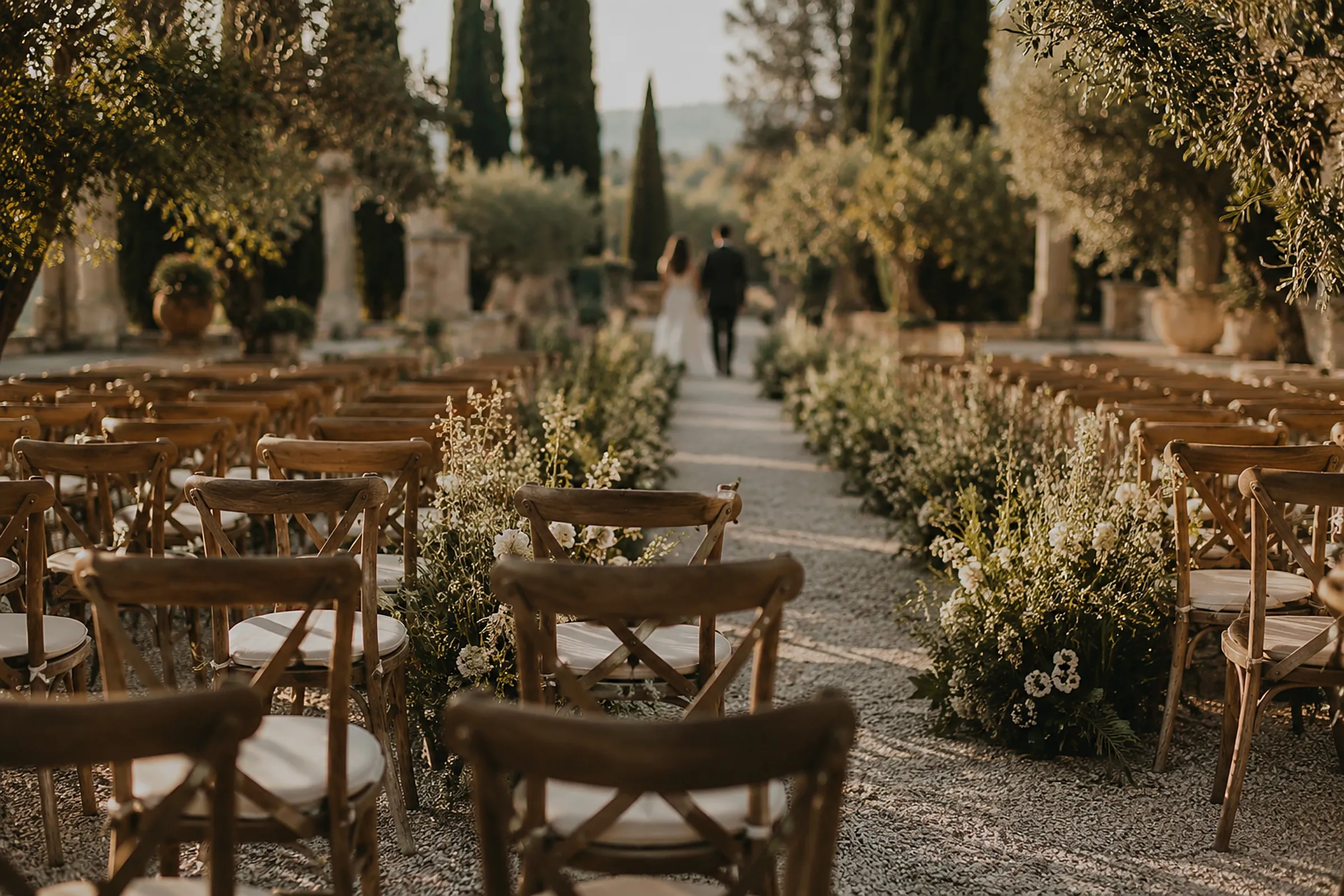
Editorial note: Images in this issue are original editorial works created for Aura Stories. The people, places and details are imagined to protect the privacy of real celebrations.
Filed under
This story is part of the permanent collection of Aura Stories — yours to return to, always.
The Issue
The Issue. Twelve weddings a year, in your inbox.
One dispatch a month — the weddings, the makers, the taste behind them. No spam, leave whenever you like.
The conversation
Comments
No comments yet. Be the first to write one.
Sign in to comment