The night begins when a glass is offered.
A wedding meal is not a pause between the ceremony and the dancing. It is the first public proof that two lives can make room.
A wedding meal is not a pause between the ceremony and the dancing. It is the first public proof that two lives can make room.
Before anyone is seated, a feast is already working. It is working in the relief of the guest who has crossed a city in a suit that does not quite belong to them. It is working in the aunt who wants to help but does not want to be managed. It is working in the former colleague scanning the room for a familiar face and finding, instead, a glass placed gently in her hand.
We talk about hospitality as though it were a style: lots of candles, good napkins, a signature drink that photographs well. Those are decorations for it. Hospitality itself is more generous and more exacting. It is the practice of noticing what another person needs before they have to make a case for it. A place to put their coat. Something salty before the speeches run long. A chair close enough to conversation and far enough from the speaker. A person who knows their name.
That is why the beginning of a wedding meal has such unusual emotional weight. A ceremony has its own architecture: aisles, vows, witnesses, an agreed direction of travel. Dinner has none of that. Dinner asks the room to become social. It asks relatives, old friends, new partners, children, work people, the shy, the jubilant and the chronically late to discover what kind of gathering this will be.
The arrangement matters because it makes a promise. A table where people can pass something to one another is different from a row of plates delivered in parallel. A single long surface, however impractical it sounds on a floor plan, lets a conversation travel. A serving bowl has an argument with the distance between two strangers; someone must ask, someone must answer, someone must decide to take a little less so the last person gets some too.
And the meal does not have to be grand to do this. The most memorable opening we heard described was a large pot of soup placed at the center of a winter wedding, with spoons arriving slowly and everyone waiting for the first warmth. What lasted was not the recipe. It was the sudden fact of sharing a temperature.
There is a practical kindness in feeding people early, clearly and well. There is also a deeper one. When a wedding gives its guests a generous beginning, it tells them that celebration will not be extracted from them. They are not merely there to witness a couple’s happiness. They are there to be held inside it.
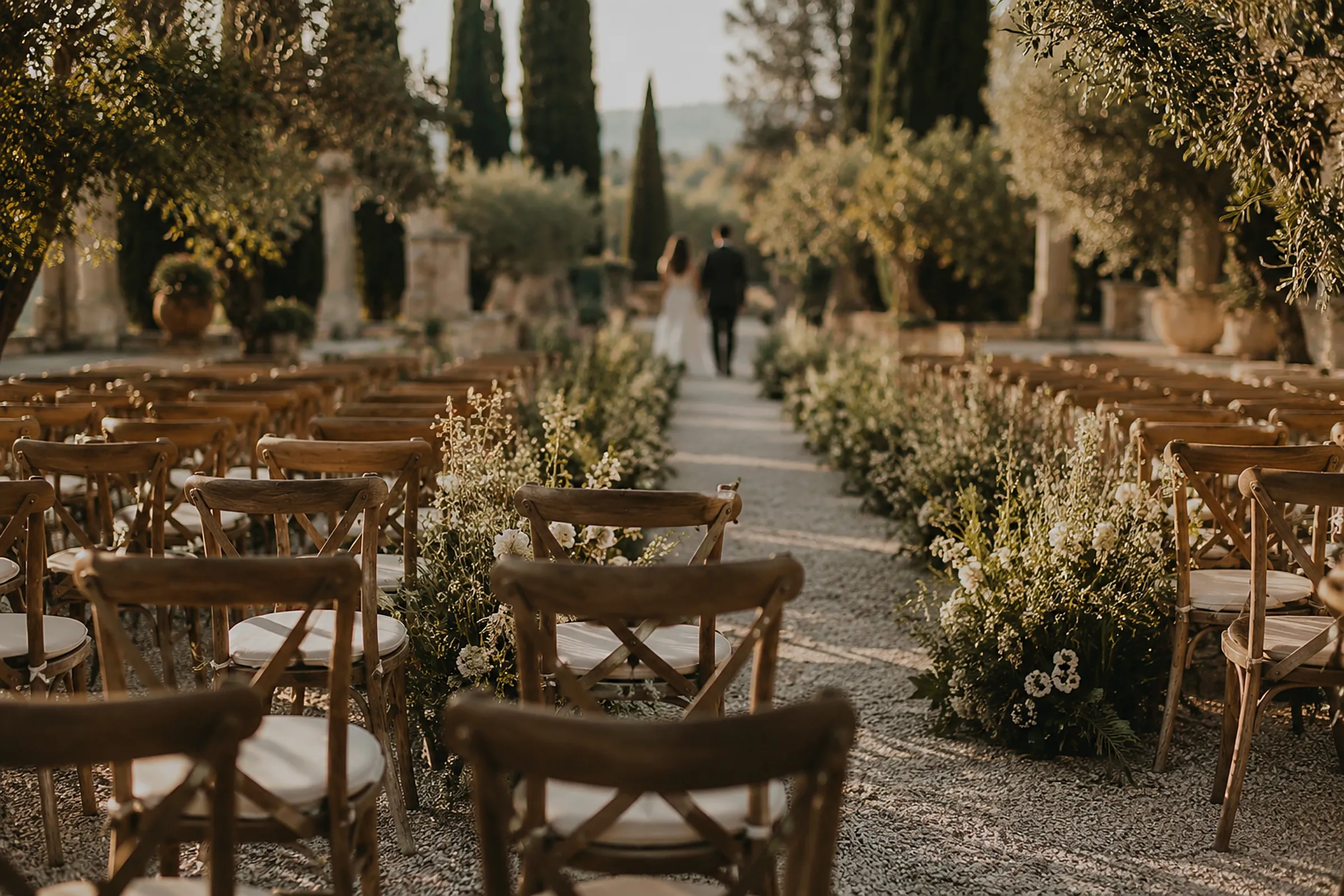
Editorial note: Images in this issue are original editorial works created for Aura Stories. The people, places and details are imagined to protect the privacy of real celebrations.
Filed under
This story is part of the permanent collection of Aura Stories — yours to return to, always.
The Issue
The Issue. Twelve weddings a year, in your inbox.
One dispatch a month — the weddings, the makers, the taste behind them. No spam, leave whenever you like.
The conversation
Comments
No comments yet. Be the first to write one.
Sign in to comment