The last stitch is never just the last stitch.
A garment is full of decisions that disappear so completely they become feeling: a shoulder that rests without thinking, a cuff that arrives exactly at the wrist, a hem that knows how a person walks.
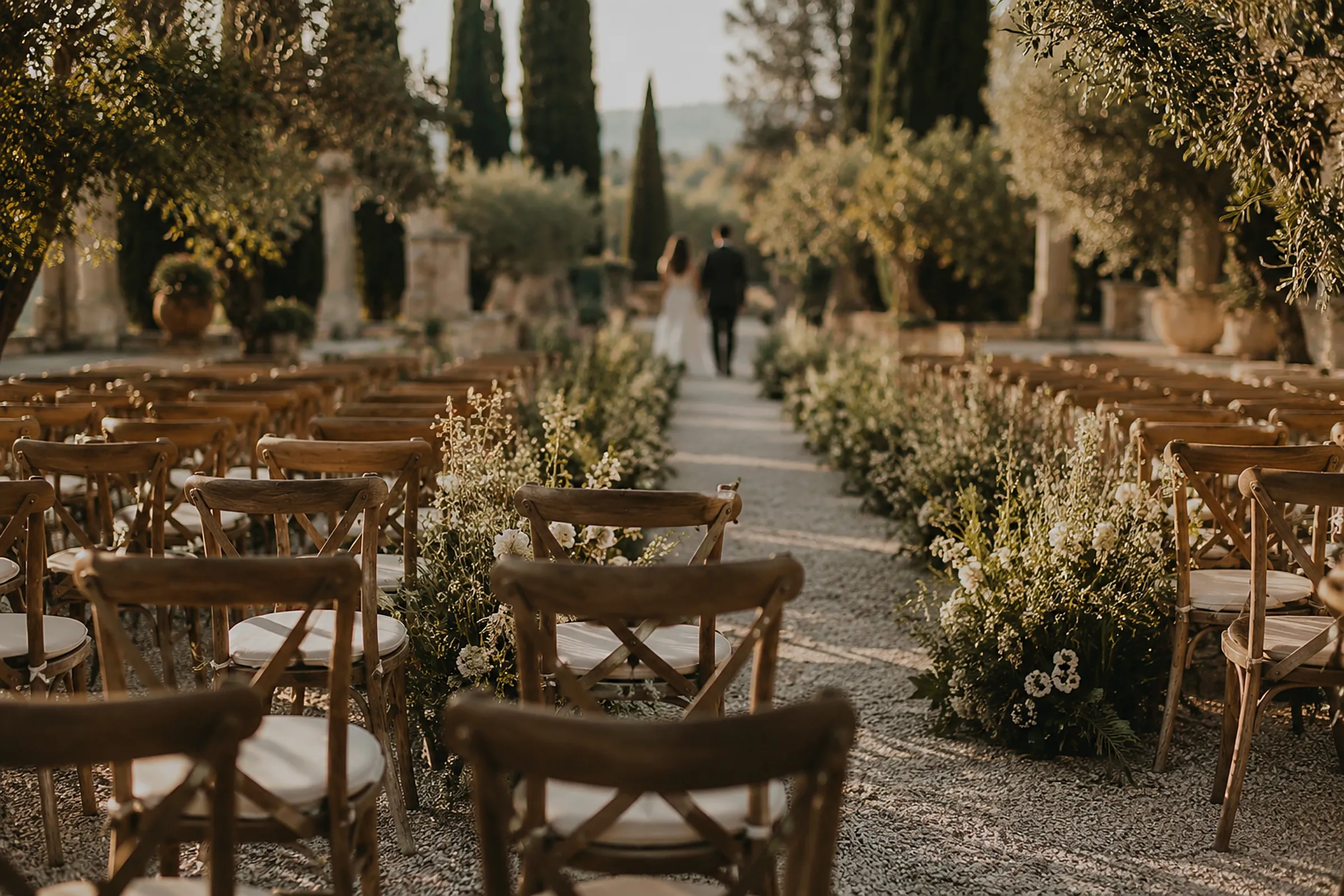
A garment is full of decisions that disappear so completely they become feeling: a shoulder that rests without thinking, a cuff that arrives exactly at the wrist, a hem that knows how a person walks.
At 7:13 in the morning, the worktable is already crowded with its small weather: a coil of copper-gold thread, three needles laid like compass points, a saucer carrying beads the colour of rain on stone. Naina does not look at the room when she begins. She looks at the sleeve. Her thumb presses the linen flat; her other hand turns the fabric so slightly that no one watching would call it a turn. Then the thread travels through.
She has been asked to make the piece look untouched. This is one of the great paradoxes of wedding work. Its evidence is meant to vanish. The seam should not announce itself. The flowers must look as if they have always been in conversation with the table. The musician should enter on a note that feels found rather than placed. Everyone is striving for the condition of effortlessness while, a few rooms away, someone is doing the very exact work that makes it possible.
Naina says the final hours are not about decoration. They are about listening. Linen loosens. Bodies change shape when they are nervous. A bride leans differently once her mother has been in the room. A groom’s shoulders settle after somebody brings tea. “You are not correcting the cloth,” she says, holding a needle upright between finger and thumb. “You are learning what the day has already asked of it.”
The sentence catches because it describes more than a garment. The people who make a wedding are constantly reading materials that cannot speak: the temperature of the garden, the temper of a grandmother, the pressure behind a laugh. Their expertise lives in these almost invisible translations. The work is not merely to execute a plan. The work is to receive a plan from the world and make it kinder.
There is a vocabulary for spectacle—grand, dramatic, unforgettable—but not much vocabulary for the hand that prevents spectacle from becoming noise. The hand that reaches for a pin before anyone sees a problem. The hand that takes a heavy tray from an older relative. The hand that folds the napkin one more time because the room is asking to soften. We mistake this work for instinct because it arrives without fanfare. But instinct is knowledge that has practised itself into grace.
By late afternoon, the sleeve lies over the back of a chair. The thread has disappeared into the pattern, which is precisely the point. Only the gold catches when the fabric moves. Naina packs her needles in the same order in which she took them out. There is no reveal, no applause. Someone will put on the garment. They will look in the mirror. They will feel, perhaps, a little more like themselves.
That is the first promise of the hand-made day: not that everything will be perfect, but that it will be attended to. The distinction matters. Perfection stands at a distance and asks to be admired. Attention comes close enough to notice where the cloth pulls.
Aura Stories / Edition 11: The Hands is an original editorial fiction. Its people, scenes, and imagery are imagined in honour of real human care.
Filed under
This story is part of the permanent collection of Aura Stories — yours to return to, always.
The Issue
The Issue. Twelve weddings a year, in your inbox.
One dispatch a month — the weddings, the makers, the taste behind them. No spam, leave whenever you like.
The conversation
Comments
No comments yet. Be the first to write one.
Sign in to comment