The geography of two families.
A wedding does not remove difference. It gives it a room, and a reason to stay awhile.
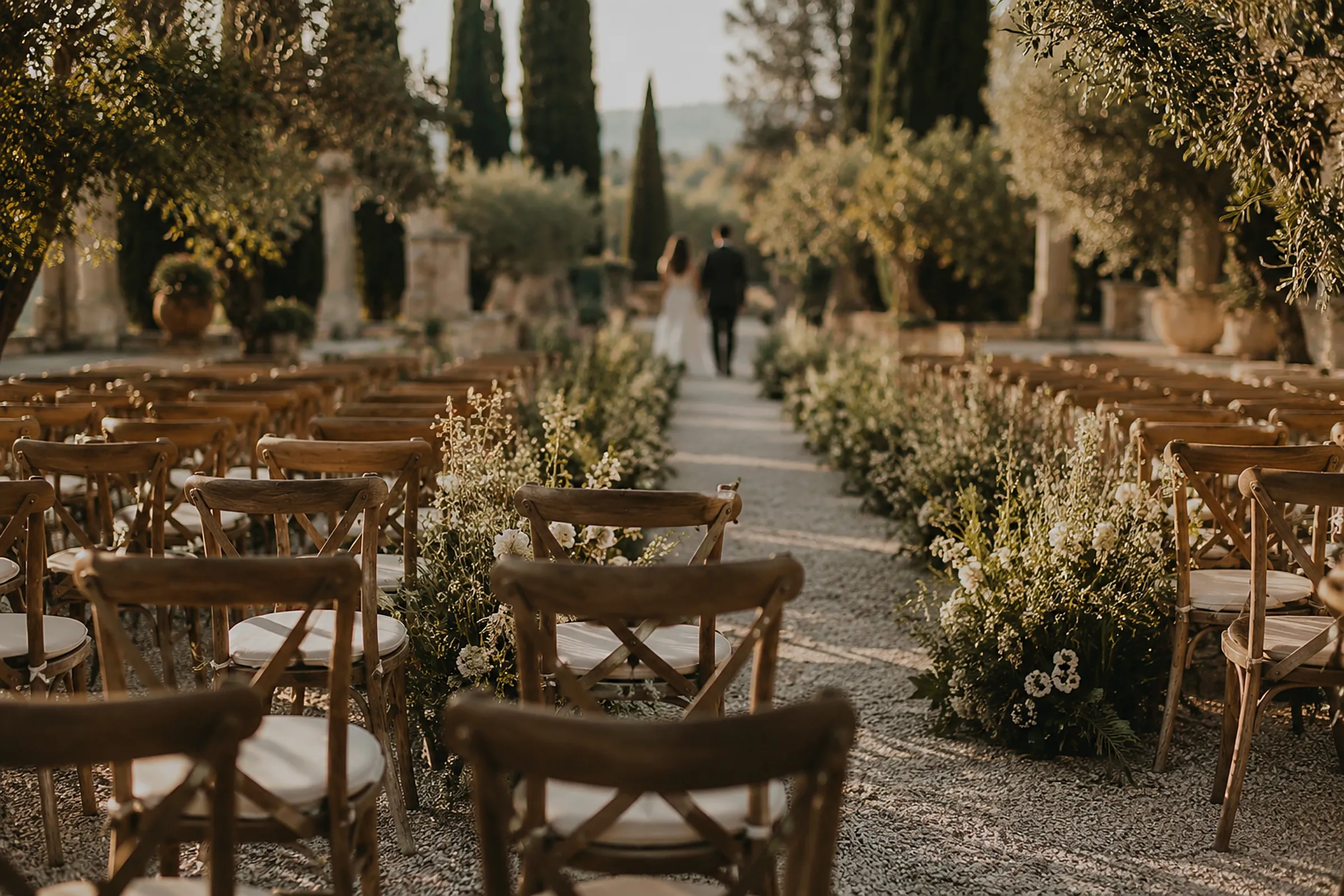
A wedding does not remove difference. It gives it a room, and a reason to stay awhile.
There are weddings where the two families have shared a language for years, and weddings where the first real conversation happens in the corridor outside the ceremony room. There are families connected by a two-hour drive, and families who have learned one another through video calls, time-zone arithmetic, recipes sent as voice notes, and the patient translation of a person who loves both sides. A wedding does not erase these distances. It gives them a room.
At five past four the two families came back through the courtyard gate from the town hall, and the courtyard they had eaten breakfast in had become a different room: one long table under the arcades, laid for dinner. Ines’s side speaks one language at home and Tomas’s side another; the couple met in a third, at work, and have spent four years living mostly in it. Only Sana, who spent two years studying in Lidia’s language for reasons of her own, moves between all of them without a pause.
That room can become a stage for sameness if we let it. The flattering version of union is often that everyone immediately understands everything: the joke, the food, the order of the welcome, the proper moment to dance. Real closeness is less smooth. It is a grandmother pausing before a ritual she has not seen before. It is a parent trying a phrase in a language that sits newly in their mouth. It is one family learning that another family begins dinner later, speaks louder, keeps the children up, removes shoes at the door, needs a little longer for photographs, brings fruit rather than wine.
Vera had practised her phrase on the plane: a greeting for Lidia, learned from a video and repeated under her breath through two films. On the road that morning she had been too out of breath to use it. At the gate she said it with great care and one wrong vowel, which turned a respectful welcome into something closer to “good morning, small cabbage”. Lidia corrected her gently. Then, a minute later, she used Vera’s version back at her, and it became their word for the rest of the night.
The point is not to make difference decorative. A cultural detail becomes flimsy when it is placed on a table merely to be admired. The more generous question is: who carries the meaning of this, and how can the rest of us be invited into it with enough context to participate? A short reading in two languages can be a gesture of respect when the translation is there because someone wanted both grandmothers to hear the same promise. A shared meal becomes richer when the dishes are named by the people whose memory they hold, rather than turned into a menu moodboard.
So when the bread came out, Lidia named it herself: the round loaf her family breaks at a doorway, and why the first piece goes to whoever travelled furthest. That evening it went to Vera. The sweet rice from Ines’s side was named by Rafael, who has made it at every family wedding for thirty years and told the story of the one time he burned it. Nobody wrote either dish on a menu card. They were introduced, the way people are.
The best crossings are rarely seamless. They have room for a little explanation, a little delight, and the occasional correction. A toast may land differently across the table. A procession may need to slow down because half the room does not know where to stand. These are not failures of atmosphere. They are the atmosphere of a wider circle learning how to gather. What matters is that the work of explanation is not left to one exhausted person at the edge of the room. Give it a microphone, a note, a host, a cousin who is happy to say: here is what happens next.
Ines and Tomas had seen the danger early. Sana would have translated everything, all night, because she could and because she loves both sides. So they gave her the microphone for the three moments that needed it and gave Oren and Kasia the rest: Oren, whose phrases in both languages are terrible and cheerful, at one end of the table, Kasia at the other. At nine Sana sat down and ate a whole plate of food without being asked to explain anything.
In practical terms, this means treating the family map as more than a seating problem. Ask who needs an interpreter. Ask which guests will be travelling alone, which relatives will be meeting for the first time, who needs a calm arrival, and who will need somewhere to put a mobility aid without feeling that they have made a fuss. These small arrangements are not administrative. They decide whether a person can relax enough to belong.
Jun, who knew nobody but the bride, was seated beside Rafael because both of them like to ask questions, and by dessert he knew the rice story better than Ines did. Mireille’s walking frame had a place by the courtyard door, folded against the wall where nobody had to move it and nobody had to mention it. Lidia’s folding chair, which Tomas had carried along the road that morning, stood beside it all evening, unused.
By the end of a good wedding, nobody needs to have become fluent in every custom at the table. The achievement is more modest, and more lasting: people leave having witnessed one another’s ways of making love visible. They have learned which hands reach first for bread, what the family calls a blessing, why one song turns a room into a chorus. A marriage makes a route between two people. A wedding, at its best, lets everyone else begin to walk it too.
Editorial note: A work of editorial fiction; people, places and makers are illustrative.
Filed under
This story is part of the permanent collection of Aura Stories — yours to return to, always.
The Issue
The Issue. Twelve weddings a year, in your inbox.
One dispatch a month — the weddings, the makers, the taste behind them. No spam, leave whenever you like.
The conversation
Comments
No comments yet. Be the first to write one.
Sign in to comment