The city did not stop for them. That was the point.
On the morning of an urban wedding, the first person to arrive is usually the street.
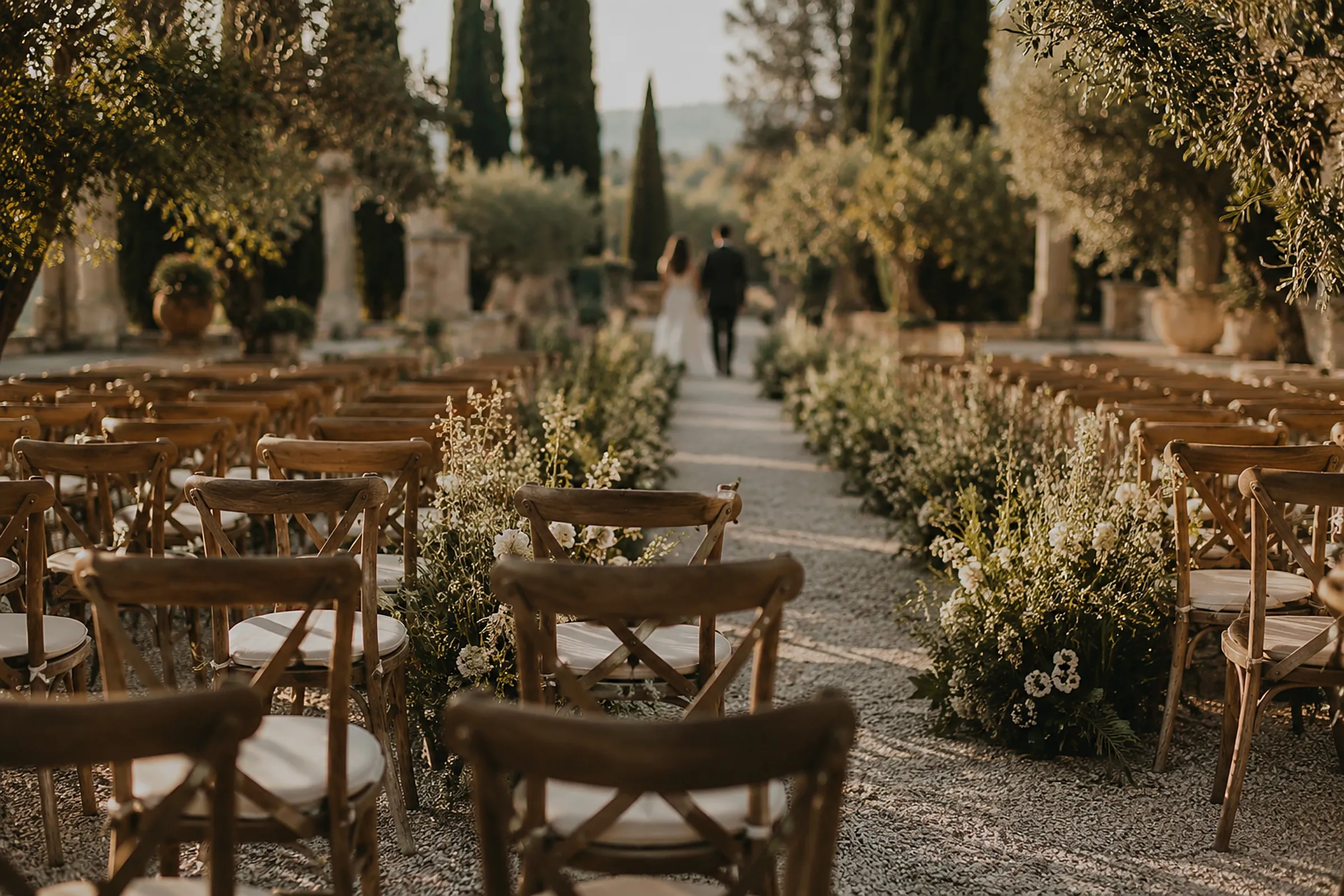
On the morning of an urban wedding, the first person to arrive is usually the street.
It is already making deliveries, opening shutters, coughing out buses, emptying a thousand small bins. It has no idea there is a silk dress hanging above a radiator on the seventh floor, or that two people are trying to make a decision about umbrellas. This indifference is not an obstacle to romance. It is its most convincing setting.
The dress belongs to Asha, and the radiator is the only hook in the flat high enough to keep the hem off the floor. She has been awake since six, which is not nerves so much as the bin lorry, which comes on Saturdays as on every other day and has never once asked what the occasion is. Leo stands at the window with his tie over his shoulder, reading the sky the way people in cities do, by the colour of the building opposite. The umbrella question is not small. There is one good black umbrella and one folding thing with a broken spoke; the registry is a twenty-minute walk or an eight-minute cab; and the forecast has said all week, “showers, clearing.” Nobody in the flat knows what clearing means. They decide, in the end, to carry both and open neither unless they have to, which is how most decisions on the day will be made.
Country weddings ask guests to surrender to one world. City weddings offer something stranger: a day that has to make room inside the world already in motion. The florist waits for the freight elevator. A father takes a meeting in the lobby. A bride, in trainers and a wool coat, crosses at the light because there is no private entrance to the day ahead. By noon, someone will have held a door with a shoulder while carrying champagne in the other hand. By night, the city will look as if it has kept the secret perfectly.
In Asha and Leo’s building the florist is a woman called Odile, who has done this before and knows that on Saturday mornings the freight elevator belongs to whoever is moving out. Today it is a family from the fourth floor. She waits beside a rolled carpet and a standard lamp with the bouquet held upright like a candle, and when the doors finally open she steps in with the movers and asks where they are going. Somewhere with a garden, one of them says. She tells him congratulations, and he tells her the same, and neither of them is entirely sure who has been congratulated for what.
Leo’s father, Martin, has a call he could not move, so he takes it in the lobby, standing by the post boxes in his good suit with a hand over his other ear. He has decided this is fine because nobody upstairs needs him yet. Teodor, the doorman, who has worked the building for longer than Asha has lived in it, watches him pace for a while and then brings a chair from behind the desk without a word. Martin does not sit down. But he notices the chair, and that evening, when someone asks him how the morning went, it is the first thing he mentions.
There is a particular dignity in the practical choreography. The wedding is not staged against the city; it is threaded through it. The taxi driver who asks where the party is. The coffee shop that lets a best friend use its restroom. The pale blue of a registry office corridor. A doorman who somehow finds enough garment bags. These are not interruptions to the story. They are the supporting cast.
Between addresses
The garment bags are Teodor’s doing too. Asha’s best friend, Mags, arrives at half past eight with two dresses on hangers and nothing to carry them in, and Teodor produces three bags from a cupboard nobody knew was there, folded flat and smelling faintly of the dry cleaner’s on the corner. Mags has also brought champagne, because she believes a morning without it is merely a weekday, and when the street door sticks she holds it open with her shoulder, bottle in one hand, hangers hooked over two fingers of the other, and lets the whole small wedding file past her into the grey.
They walk. Asha wears trainers and her grandmother’s wool coat over the dress, and carries her shoes in a tote bag from a bookshop. At the first crossing the light is red, and they wait with everyone else: a man with a dog, two teenagers sharing headphones, a delivery rider balanced on one foot. Nobody says anything. The light changes, the whole crowd moves at once, and for half a block the bride is simply a person in a coat walking fast because she is nearly late. Mags needs a restroom before the registry, so they stop at the coffee shop where Leo buys his flat white every weekday. The woman behind the counter waves her through without asking for a purchase, then sees the hem under the coat and puts two pastries in a paper bag, on the house.
A city gives a wedding what a ballroom cannot: scale, speed, witnesses—and somewhere to disappear to together.
The best photographs from a city wedding are often made between addresses.
What makes this kind of day feel expansive is also what brings it close. In a village, a wedding may be the only thing happening. In a city, it is one glowing fact among millions. Lovers are made smaller by the skyline, then suddenly more visible to one another. They are in the crowd, not apart from it. A hand on the small of a back becomes a signal bright enough to find across an avenue.
Their photographer, a friend of Mags’s called Priyanka who usually photographs restaurants, understands this before anyone has to explain it. She does not try to stop the street. She walks a few steps behind and waits for the city to arrange itself around them: Leo turning to say something and losing the end of the sentence to a bus; Asha’s hand finding his back as they step off the kerb; a man on a bench lifting his coffee cup in a small private toast and returning to his newspaper. None of these pictures is on the list Priyanka was given. Most of them end up in the album.
That is why the urban wedding has its own grammar. It is less about arrival than passage: leaving the apartment, arriving late, taking the long way, changing shoes in a cab, deciding not to go home yet. It prefers a sequence of rooms to one perfect room. It allows beauty to be found in the thing that nearly went wrong, then did not. And because the city will continue moving no matter how luminous the dinner becomes, it leaves the couple with the rarest possible gift: the sensation that their private life is bigger than the plan.
What the city keeps
The thing that nearly goes wrong on Asha and Leo’s morning is, of course, the umbrella. The showers arrive three minutes from the registry, sudden and warm, the kind that sends everyone under awnings. The good black umbrella goes up over the bride. The broken folding one goes up over Martin, who has caught up with them, and it turns inside out on the first gust, and he stands in the rain holding the wreck above his head with the dignity of a man holding a flag. Nobody laughs until he does. Then everyone does, including two builders sheltering in a doorway who have no idea whose wedding it is and do not need to.
Twenty minutes later they come back out onto the registry steps married, and the rain has stopped, as promised, without anyone noticing the moment it did. A bus is waiting at the lights below. Its top deck is full of people going somewhere else, shopping bags and school blazers and a man asleep against the glass, and for the length of a red light they all look down at the small group on the steps. Somebody waves. Asha waves back. The light changes, the bus pulls away, and a deckful of strangers carries the sight of the wedding off across the city, to be mentioned, perhaps, at a kitchen table that evening, or not at all.
By the end of the day the couple will have crossed the city twice and taken a cab, a lift, a staircase and a long corridor with a number on the door at the end of it. They will have been witnessed by a registrar, a doorman, a florist, a barista, a driver and a great many strangers who will not remember them. That is the gift. A wedding in a city does not get the city’s attention. It gets something better: a place inside its ordinary life, held for a few hours, then handed back as if nothing had happened.
Very late that night, walking home, Asha will look up at the seventh floor and see that they left the radiator on. The flat will be warm. The building will be asleep. The street will be doing what it always does at that hour, rinsing itself, waiting for the first bus. It will look, as streets do, as if it noticed nothing at all.
Editorial note: A work of editorial fiction; people, places and makers are illustrative.
Filed under
This story is part of the permanent collection of Aura Stories — yours to return to, always.
The Issue
The Issue. Twelve weddings a year, in your inbox.
One dispatch a month — the weddings, the makers, the taste behind them. No spam, leave whenever you like.
The conversation
Comments
No comments yet. Be the first to write one.
Sign in to comment