Start with the room that has a number.
The civil ceremony is not the small version of the wedding. It is the sentence that makes the rest of the day possible.
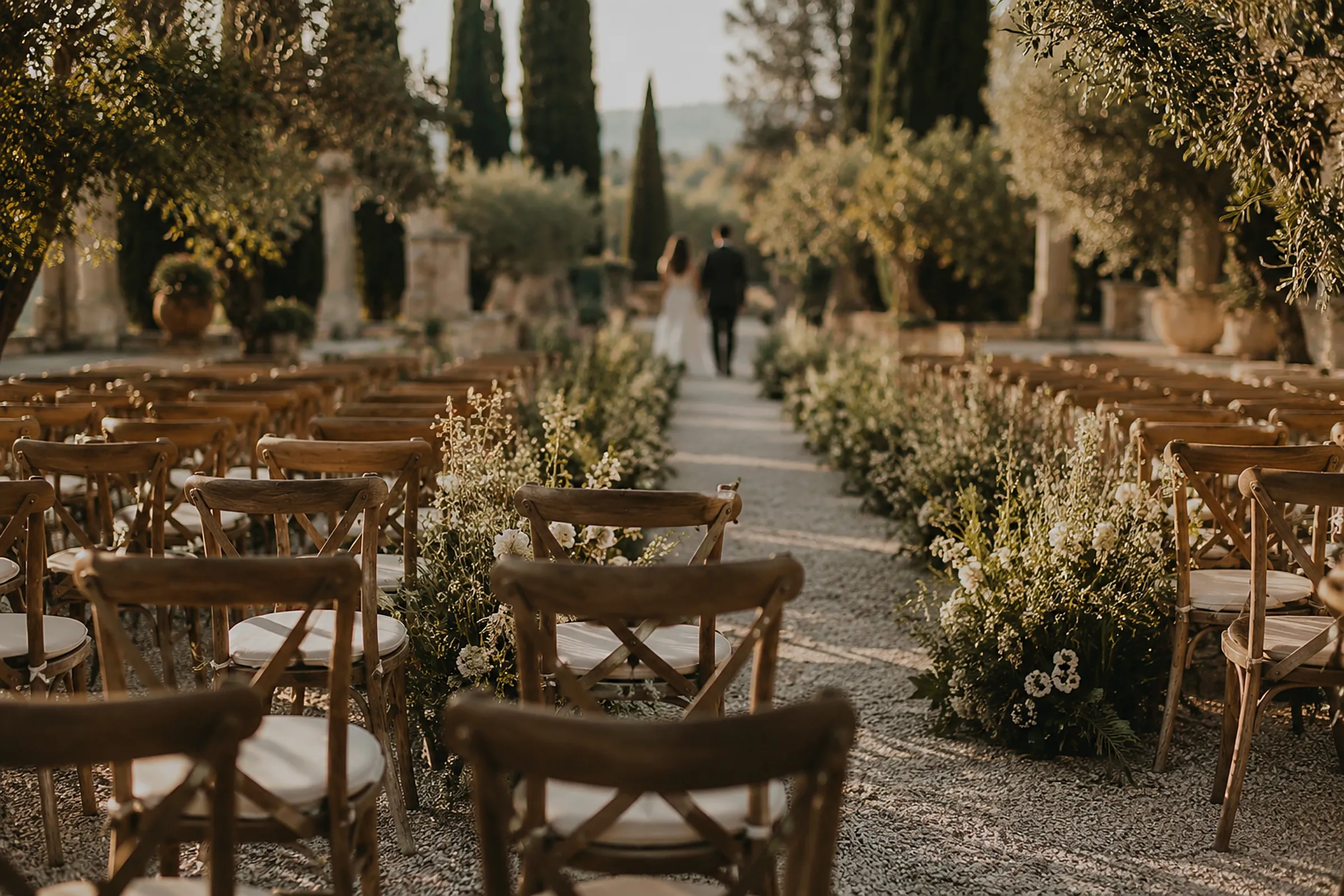
The civil ceremony is not the small version of the wedding. It is the sentence that makes the rest of the day possible.
There is glamour in the municipal room precisely because it does not ask for it. Its windows are tall. Its chairs have been useful to many people. The building is designed to hold an administrative truth, then lets the emotion arrive unscheduled.
Asha and Leo are married in Room 4. It says so on the confirmation letter, on a laminated sign taped to the door, and on a brass plate above the handle that so many hands have polished it is hard to read. Ahead of them is a couple in matching rain jackets who have brought their two witnesses and a small dog that is not, strictly, allowed. Behind them is a family of eleven with a baby who sleeps through everything. In the corridor everyone is briefly a stranger to everyone else and then, as each door opens and closes, briefly not.
The registrar is a woman called Mrs. Hale. She has a lanyard, a fountain pen and a way of looking at people over her glasses that makes them stand up straighter. She asks them to confirm their names, their addresses and the spelling of a middle name Leo has been embarrassed by since school. She does it kindly, but she does not hurry and she does not decorate. There is no music unless they bring it. There is a clock on the wall above her desk, three minutes fast, and it stays that way.
In a registry office, the most generous choice is to let the institution remain itself. Do not attempt to turn it into a chapel, a drawing room, or an Instagram set. Bring the people who make you brave. Bring one good bouquet if you like. Let the built-in clock be visible. Let the city remain audible through the panes.
What they did not bring
It was not always going to be this plain. For a few weeks in the spring Asha’s mother sent links to garlands, to rented arches, to a company that would dress any room in white silk for an afternoon. Asha looked at every one of them and asked, finally, what the room would look like if they left it alone. They went to see it on a Tuesday. It was empty except for the chairs and the light. Leo said it looked like a place where people had made promises before, which was the point, and the garlands went no further.
So they brought Odile’s bouquet, white and slightly uneven. They brought Mags and Asha’s grandmother, Ida, as their witnesses, because two were needed and those were the two. They brought nothing for the walls. Through the tall window behind Mrs. Hale a crane on a building site swung a pallet of bricks slowly across the sky, a siren passed somewhere below, and someone in the corridor laughed at something that had nothing to do with them.
The room’s formality creates relief. It tells the couple: no performance is required. Say the thing clearly. Sign your names. Then step back outside where the traffic has been waiting, not impatiently, for you to rejoin it.
Leo says the thing clearly, though his voice goes on the second line and he has to begin it again. Asha says it faster than she meant to, as if it might be taken back. Then there is the register itself, a heavy book with a ribbon, and the pen, which Mrs. Hale turns towards them with the cap already off. Asha signs the way she signs everything, quickly, leaning in. Leo signs slowly, as though handwriting were a skill he had only just been taught. Ida signs last and adds the date, although nobody asked her to, in the careful hand of a woman who has filled in a great many forms.
By the fast clock the whole thing takes nineteen minutes. Out in the corridor the family of eleven stands up at once. The couple with the dog has gone. The pale blue walls are exactly the colour they were before, and the number on the door is still a number. It will be on the certificate too, beside a reference that means nothing to anyone but the city, and that is as it should be. Some sentences only need to be said once, in a room built to hold them, before the rest of the day can begin.
Editorial note: A work of editorial fiction; people, places and makers are illustrative.
Filed under
This story is part of the permanent collection of Aura Stories — yours to return to, always.
The Issue
The Issue. Twelve weddings a year, in your inbox.
One dispatch a month — the weddings, the makers, the taste behind them. No spam, leave whenever you like.
The conversation
Comments
No comments yet. Be the first to write one.
Sign in to comment