At the threshold, every language travels.
Translation is not a prelude to the day. It is one of the ways the day holds its people.
Translation is not a prelude to the day. It is one of the ways the day holds its people.
The hour before a ceremony is full of tiny acts of translation. A sister translates the instructions on a train platform. A planner translates a family preference into the shape of a dinner. A child translates adult nerves into a request for snacks. Somebody translates ‘we would love a quiet moment’ into a closed door and ten uninterrupted minutes. None of these gestures are ceremonial, yet they are what make ceremony possible.
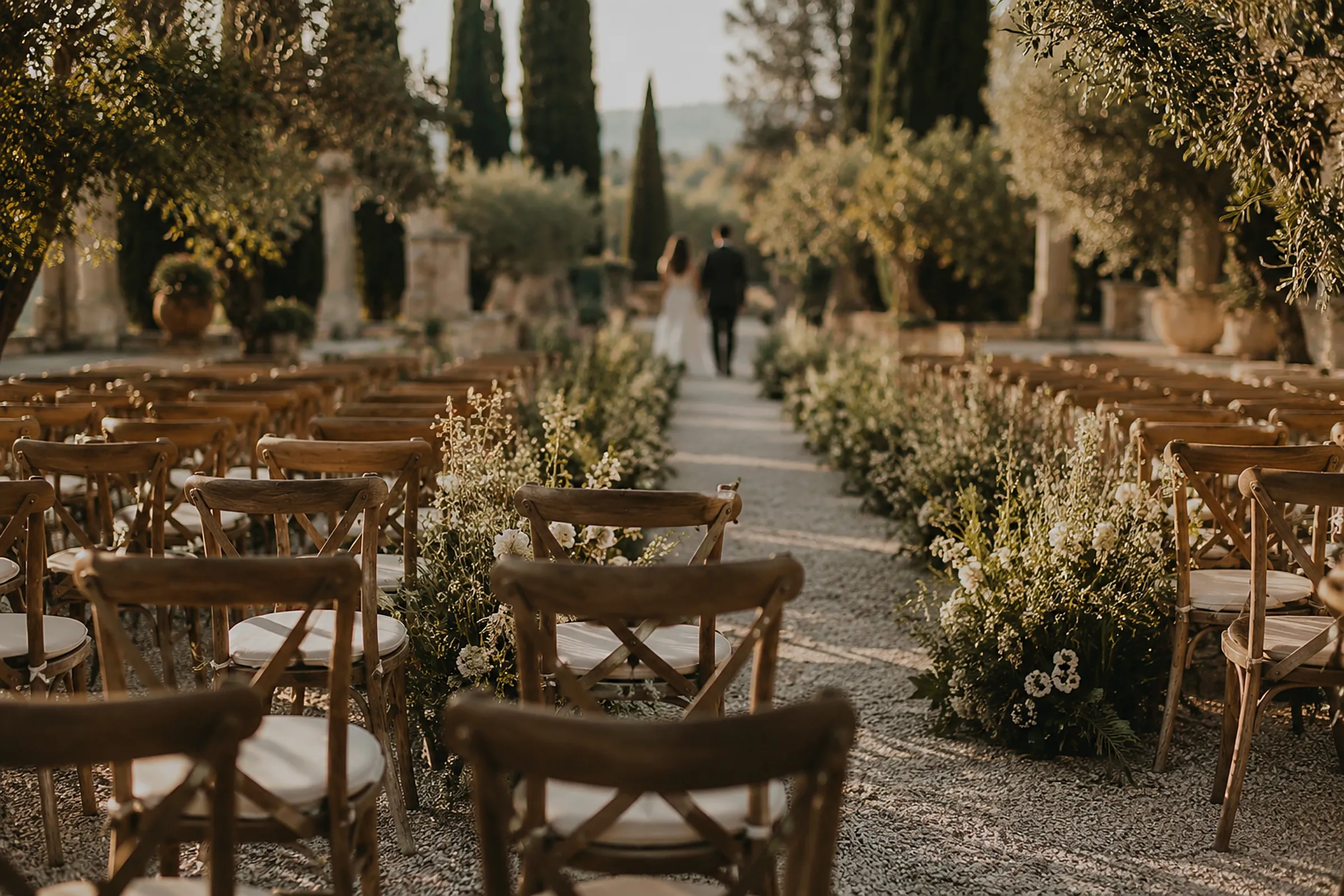
At half past five the courtyard house was full of these. Sana was on the telephone to the taxi office, translating Rafael’s instructions about the airport cars into a language the dispatcher could use. Kasia’s son Milo, who is six, announced that he was not nervous but hungry, and was given bread. Oren, at the foot of the stairs, turned “they would love a quiet moment” into a closed door at the top of the stairs and ten minutes with nobody knocking. The blessing would begin at half past six, under the arcades.
For couples whose families have grown up in different countries or moved through several of them, translation becomes a form of hosting. It is not only language. It is explaining why the speeches start where they do, which relatives must be greeted first, why food is served family-style, why the couple disappears for a short portrait walk, why a procession takes an extra turn around the courtyard. Translation says: you are not an audience here; you have a way in.
The blessing was Lidia’s: a short form of words her family says over a couple at a threshold, followed by the bread. Nobody on Ines’s side had seen it. So on every table there was one card, with one sentence in each language: Lidia will speak a blessing at the courtyard door; when she lifts the bread, stand if you are able. That was all. It did not explain the words. It explained what was being asked of the people listening.
The trap is to over-explain until the room feels like a museum of itself. Not every ritual needs a caption. But a few well-placed words can remove the thin loneliness of not knowing what is being asked of you. A simple card at the table. One line from the person making a toast. A programme that uses both languages without making either feel secondary. The aim is clarity with warmth, not compliance.
This work belongs to the wedding’s emotional geography. The person who has migrated may be accustomed to becoming the bridge by default: translating documents, time zones, elders’ questions, the tone of a phrase that does not survive a literal conversion. On their wedding day, that bridge deserves reinforcement. Let an officiant explain the shape of the ceremony. Let trusted people carry some of the welcoming. Let the couple be allowed to arrive in their own day without having to narrate every threshold.
Tomas had been that bridge since he was nine, when his family moved and he became the one who answered the door, read the letters and rang the doctor on Lidia’s behalf. On his wedding day Sana and Kasia took the work between them, and it was only halfway through the blessing that he noticed he was hearing it in one language only, the way it was meant, without listening for the next thing he would have to say.
After Lidia had lifted the bread, Ines held up her phone and played Abel’s message through a small speaker on the window ledge: the fourth attempt, the one he got right. Sana had written a single line of it on the back of each card in Lidia’s language. Lidia did not know the word Abel used for “journey”, but she knew from his voice what he meant, and she nodded at the speaker as though he were in the room.
What guests remember is rarely the perfect translation. It is the feeling of having been considered. It is hearing a word they do not understand and knowing someone thought to tell them why it mattered. It is being offered food with its real name. It is a room where difference is not a problem to solve quickly, but part of the distance everyone has chosen to cross.
Editorial note: A work of editorial fiction; people, places and makers are illustrative.
Filed under
This story is part of the permanent collection of Aura Stories — yours to return to, always.
The Issue
The Issue. Twelve weddings a year, in your inbox.
One dispatch a month — the weddings, the makers, the taste behind them. No spam, leave whenever you like.
The conversation
Comments
No comments yet. Be the first to write one.
Sign in to comment