After the chairs, the quiet stays
Once the last guest has gone, a wedding becomes audible in a new way. The room stops presenting itself and begins to give back its evidence.
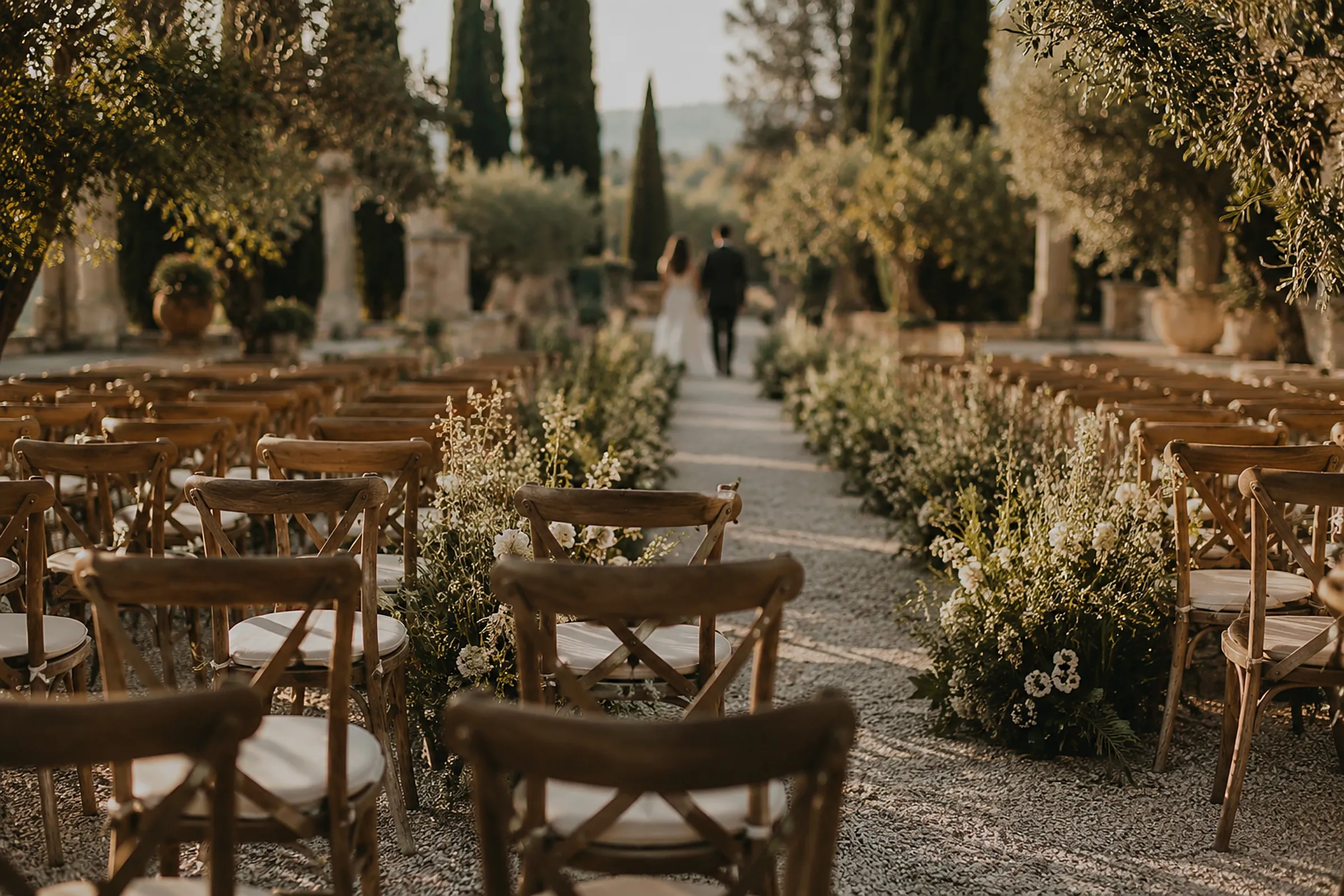
Once the last guest has gone, a wedding becomes audible in a new way. The room stops presenting itself and begins to give back its evidence.
The departure begins before anyone notices it. One table is cleared. A coat is collected. The room’s laughter starts arriving in smaller pockets instead of one large weather system. A person who has been speaking for six hours becomes suddenly quiet. Near the exit, two friends prolong a goodbye because neither wants to be the one who admits the night has ended. Then the final guest leaves, and the room makes a sound nobody has paid for: the practical sound of returning to itself.
There are wheels under the catering cases. There is a broom moving grit across stone. There is the refrigeration hum that had been inaudible beneath the band. A glass tips in a bus tub and rings once before it is caught. These sounds can feel cruel if a couple is pushed out of the room too quickly; they make the dismantling of a beautiful day seem like a correction. Given a little time, they become something else. They are proof that a celebration was an event made by human labour, not a place that appeared for a photograph and vanished afterward.
The private walk-through
The couple have been advised to take ten minutes alone before the car arrives. It is a small instruction, easy to dismiss as another item in an over-designed schedule. But it changes the final shape of the day. They walk through the empty dinner room without trying to narrate it. One of them removes a stray ribbon from a chair. The other finds a note someone has left beneath a plate. They pass the place where the parent gave the speech and the spot where the children made their own dance floor.
All day, they have been receiving attention. They have entered rooms, posed, promised, hugged, thanked, danced on request. The empty room returns them to a scale that is not public. Their tiredness can finally be proportionate to the day. One begins laughing and cannot explain why. The other says nothing. The silence between them is not the ceremony’s silence. It has no audience, no job. It is simply the first quiet they have shared since morning.
What the room keeps
A wedding does not retain its meaning in the objects most carefully chosen for it. Those objects matter, and photographs will help them return. But memory often keeps the sound that attached itself accidentally to a feeling: a heel catching on a stair; a spoon against a glass before a friend speaks; an unplanned laugh through a service wall; the almost-inaudible first line of a prayer. Years later, these are the details that can open the day without warning. They do not return as images. They return as bodily knowledge.
That is why the quiet after departure deserves protection. It is not a sentimental epilogue. It is the moment in which people begin to convert a public event into personal memory. If a driver is waiting, if staff need access, if a room has to be cleared, the time can be brief. It can be the length of one walk from the door to the dance floor and back. But it should belong to the people whose life is changing, not to the machinery that needs them to leave.
The work that remains visible
At the far end of the courtyard, a member of the crew is folding chair covers. She has been moving in and out of the room all day, appearing only when something needs to be repaired. The couple thank her. She says the room sounded good tonight. It is a particular compliment, more precise than beautiful. It means the speakers did not become the loudest thing in the room. It means the prayer was heard, the band knew when to hold back, the laughter did not become a problem, and nobody had to fight for their voice.
The couple leave with the knowledge that the night is ending for everyone else, too. The sound crew will pack their cases. The musicians will drive home in silence or call someone from the car. The family will keep talking in a hotel lobby until the practical world reasserts itself. A wedding creates a temporary arrangement of attention; departure dissolves it. The grace lies not in pretending the arrangement can last, but in allowing the care inside it to travel.
Outside, the car door closes. It is an ordinary sound. Inside the empty room, the final light is switched off one circuit at a time. Nothing dramatic occurs. Still, the day has changed form. It now exists in the bodies of the people who heard it together: as a held silence, a parent’s caught breath, a drum pattern, a sentence that could not be translated exactly, the small practical noise of a room after everyone has gone. The quiet does not erase these things. It gives them somewhere to remain.
The last song is not the ending. It is the room learning how to hold what happened after the people have gone.
Editor's note: A final piece about departure, labour, memory and the right to a private minute after a public day.
Filed under
This story is part of the permanent collection of Aura Stories — yours to return to, always.
The Issue
The Issue. Twelve weddings a year, in your inbox.
One dispatch a month — the weddings, the makers, the taste behind them. No spam, leave whenever you like.
The conversation
Comments
No comments yet. Be the first to write one.
Sign in to comment