The air between us.
A room can look composed and still feel unfinished. Often, what is missing is not another object but a note in the air.
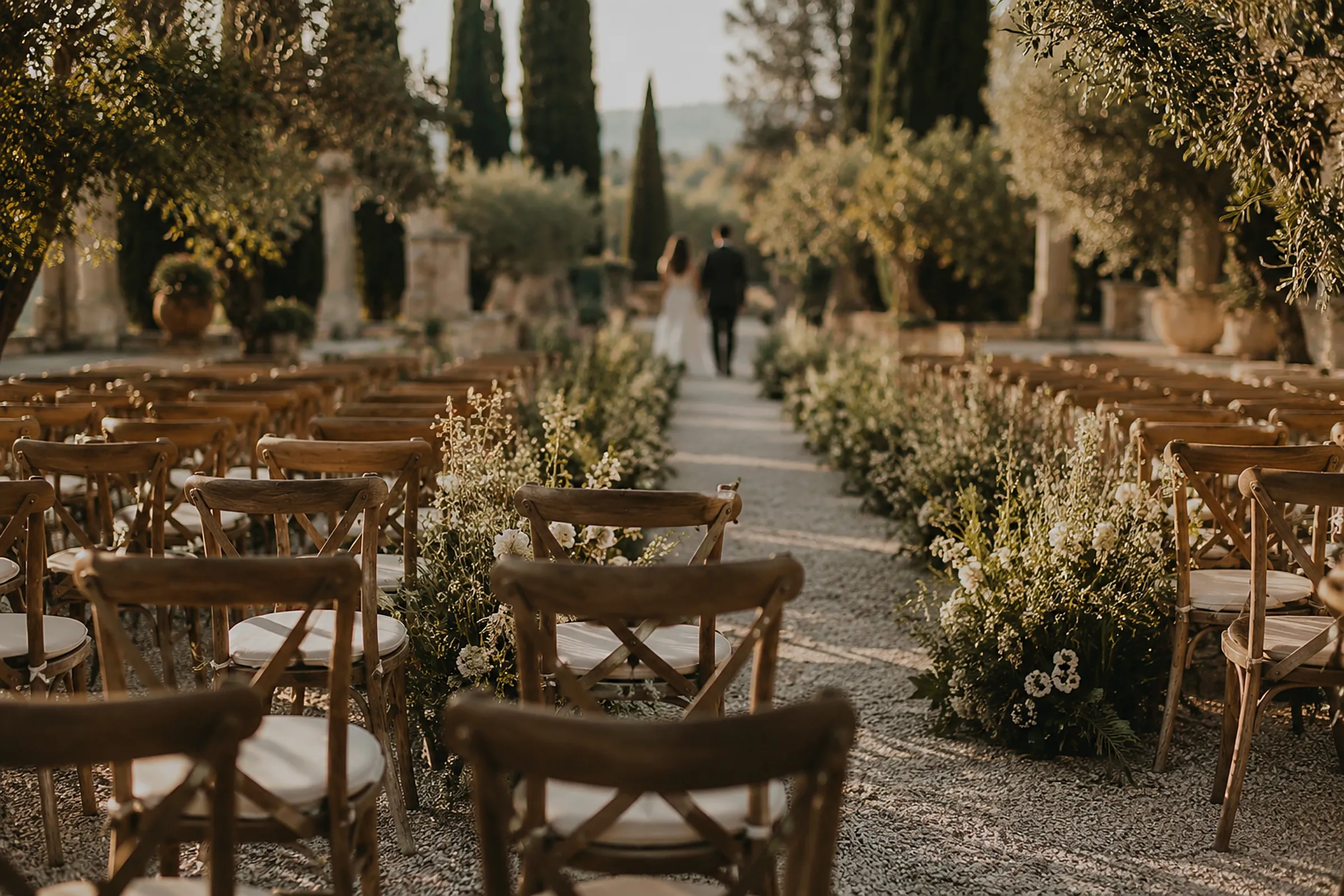
A room can look composed and still feel unfinished. Often, what is missing is not another object but a note in the air.
Scent is the least photographable form of floral design, which is perhaps why it has remained so powerful. It slips past our opinions. You cannot decide not to recognise orange blossom, wet stem, crushed leaf, a garden rose that smells almost peppery in the shade. Fragrance keeps arriving after the eye has become accustomed to the picture.
Specimen 04.1 — The entry, 17:26
In the conservatory, the first scent problem arrives as a bucket of tuberose. Ishani wants it at the entrance because it was the flower at her parents’ wedding, and she remembers the story of it better than any photograph: her mother, at the door of a hall, saying it smelled like a garden at night. Saba understands the request completely. She also knows that the entrance to this room is a narrow stone arch with no breeze, and that by eight o’clock every guest will have passed through it, most of them more than once.
But scent is not a volume knob to turn until the room announces itself. It is social architecture. At close range, tuberose can become intimate; across a crowded dinner, it can become exhausting. Narcissus has a beautiful, complicated insistence. Sweet pea vanishes just when you think you have found it. The wise arrangement leaves a little of the air unclaimed.
So she splits the tuberose. A few stems go into a tall glass at the arch, enough for the first breath, the one that tells a guest they have arrived somewhere. The rest she carries further in, to the long table where Ishani’s parents will sit, in small glasses spaced far enough apart that each can be found and none can take over. When she explains it to Ishani on the phone there is a pause, and then Ishani says: so it’s still there, it’s just not shouting. Saba writes that down.
The second problem is Cal’s side of the room. His aunt Maren asked, politely and a month ahead, that nothing strongly scented be put near her, because heavy perfume makes a long evening hard for her. Nobody turns it into a drama. It is a preference, said early, and Saba treats it the way she would treat a seating note: the table nearest the open glass doors gets ferns, quince and the dark anemones from the market, which smell of almost nothing but green.
Flowers teach this better than most materials: the atmosphere of a room need not be everywhere to be felt. A few deliberate pockets—a perfume near the entry, a leafier quietness at the table, something strange in the corridor—can create a map guests follow without knowing it.
Specimen 04.2 — The corridor, 19:50
The strange thing in the corridor is Lukas’s idea. Between the dining hall and the room where the band plays there is a stone passage with nothing in it but a bench and a draught. He sets a shallow glass bowl of water on the bench and fills it with the roses that opened too fast in the van, pulled apart, and a handful of crushed leaves from the conservatory’s scented geraniums, picked with the caretaker’s permission. It is not an arrangement. It is barely a decoration. But the bowl warms a little under the lamps, the passage begins to smell faintly of rose and something sharper, and people who walk through it slow down without knowing why.
Late in the evening Maren is found in that corridor, sitting on the bench beside the bowl. She tells Cal, who has come looking for her, that it is the only place in the building where she can actually smell the flowers, because everywhere else the room is too full of people. She does not mean it as a complaint. She means that the scent she could bear was the one she found for herself.
There is a limit to what a florist can design here, and Saba is honest about it. She cannot decide who wears perfume, which doors are opened, or how warm the room becomes once the dancing starts. She can only decide where the flowers begin and where they stop, and leave the rest of the air to the guests. The bowl in the corridor will be emptied into the yard drain at midnight. Nobody photographs it. It is the thing three different people mention afterwards.
In the night herbarium, the card for that evening has nothing pressed beside it, because scent cannot be pressed. It reads only: Tuberose at the door, but not too much. Rose in the corridor. Let them find it.
Editorial note: A work of editorial fiction; people, places and makers are illustrative.
Filed under
This story is part of the permanent collection of Aura Stories — yours to return to, always.
The Issue
The Issue. Twelve weddings a year, in your inbox.
One dispatch a month — the weddings, the makers, the taste behind them. No spam, leave whenever you like.
The conversation
Comments
No comments yet. Be the first to write one.
Sign in to comment