Flowers carry a room.
They make a ceremony feel like it has arrived somewhere before we have. They also arrive in buckets, with invoices, bruises, and a very specific thirst.
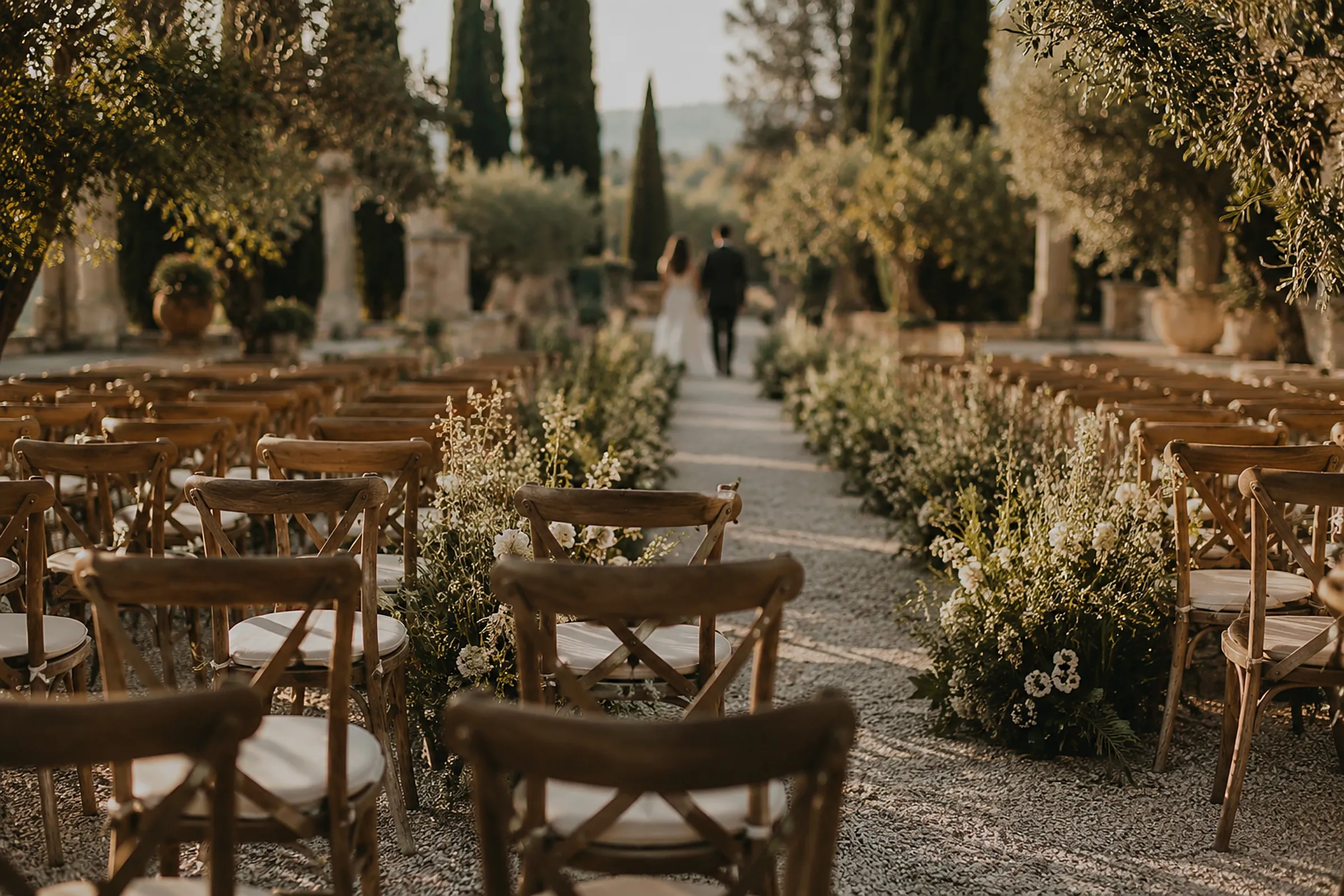
They make a ceremony feel like it has arrived somewhere before we have. They also arrive in buckets, with invoices, bruises, and a very specific thirst.
At a certain point in the making of a wedding, flowers stop being an idea. They become traffic. The back door opens and there they are: stems as long as walking sticks, heads wrapped in paper, buckets ticking softly against one another. Somebody is counting hydrangeas. Somebody else is looking for a cool corner. The room does not yet know it is about to become beautiful.
Specimen 02.1 — The back door, 15:43
On the afternoon of Ishani and Cal’s wedding, the back door is at the end of the conservatory’s service corridor, a long stone passage that smells of wet gravel and of the delivery bay. Saba Rahim stands in it with a clipboard she does not look at. Lukas Fenn has reversed the van as close as the bollards allow, and the buckets come out in the order they went in before dawn: greenery first, because it is heaviest and forgives the most handling; then the hydrangeas, which forgive nothing; then the white garden roses in their paper collars, carried two at a time and held away from the body like something that might spill.
Saba counts by touch. A hand on each rim, a glance at the water line, a thumb along one stem to feel whether it has drunk since morning. Eleven buckets of foliage, nine of hydrangea, six of roses, and four of the long branches she calls the walking sticks: flowering quince, cut early and wrapped in brown paper like a delivery of umbrellas. Someone from the venue asks where they should go. The cool corner, she says, by the north glass, where the afternoon does not reach. There is always a cool corner. The first job in any room is finding it.
We tend to meet flowers at their most persuasive moment: already cut, already composed, already leaning exactly where the eye wants to go. But an arrangement begins as an argument with scale. How much green can a table hold before it feels forested? What happens if the flowers are not evenly good? Which shapes read as welcome from the far side of a room, and which only reward the person close enough to smell them?
Ishani’s brief had been a single sentence, written on the back of the floor plan: “We want it to feel like the plants were here first.” Underneath, in different ink, Cal had added: “And like we were allowed in.” Saba keeps the plan pinned inside the van door. She has read it so often that the paper has gone soft at the fold. It is a generous sentence, and also a problem. The conservatory already holds tiers of palms and ferns that have been growing there far longer than anyone in the wedding party has been alive. Anything she brings will either be swallowed by them or will shout over them, and the couple asked for neither.
So the argument with scale begins in the room itself. Lukas holds a quince branch at the head of the aisle while Saba walks to the far end, past the stone planters, past the plum-coloured wisteria the conservatory grows on its own, and turns. She raises a hand: higher. Higher. Now lean it toward the glass. From the back of the room the branch is a line and nothing more, but it is the only line in the room that points at the couple’s chairs. She nods and walks back. They do it eleven more times, once for every branch.
Specimen 02.2 — The aisle, 16:20
Saba has a sentence she says to every assistant in their first season, usually just after they have filled a vessel so full it looks as if it is trying to leave. She says it now to Bea, a temporary hand hired for the weekend, who has packed the hydrangeas shoulder to shoulder in a low trough by the entrance.
“The useful question isn’t whether it feels abundant. It’s whether it gives the room a pulse.”
Bea takes out four heads and the trough breathes. The blooms that remain sit at slightly different heights, and the gaps between them fill with the dark green of the ferns behind. Up close it looks like less. From the doorway it looks like more, and it looks as if it grew there.
Abundance is not the same as quantity. A hundred stems pressed into one narrow neck can look anxious; six branches with enough air around them can make a ceiling feel taller. Good floristry is less like accessorising than directing attention. It gives the room a beginning, a resting place, and a reason to look again. It lets a guest understand, without instruction, where to gather and where to breathe.
Specimen 02.3 — Blank tables, 17:05
The tables arrive as bare rounds and stay bare for an hour longer than anyone would like, because the linen is late. Saba uses the time. She walks the floor between the tape marks and lays one stem flat on the stone where each centrepiece will stand: a rose, a sprig of quince, a single frond of fern. From the mezzanine the floor looks like a herbarium sheet the size of a room, a page of specimens waiting for their labels.
That is why the floral work is often most moving before anyone sees it. There is a brief, private hour when the tables are still blank and the floor is marked in tape. Someone lifts a stem, steps back, turns it a fraction. Someone on the other side of the room does the same. They are not decorating. They are setting the room’s temperature.
Not everything holds. One bucket of roses, the variety Ishani chose from a photograph, has opened faster than the rest in the warmth of the van, and by five o’clock the outer petals are loosening. Saba could hide them at the backs of arrangements. Instead she gathers them into one low bowl for the table where Cal’s grandparents will sit, close to the music, where scent will matter more than silhouette. The decision takes her less than a minute, and no guest will ever know it was a substitution. That is the job too: knowing which imperfection a room can carry, and where to put it.
Lukas’s part is less visible still. He takes the empty buckets to the yard, rinses them, and stacks them in the order they will be needed at midnight, when everything hired has to come back out. He tops up the vases that will be hardest to reach later. He finds the caretaker and asks which tap runs coldest. He is the person who knows where the water is, and in a room made of living things that is a kind of authority.
At twenty to six Cal comes down the service stairs in his shirtsleeves, against everyone’s instructions, because he wants to see the room before it is finished. He stands at the back for a long time. Then he asks, carefully, whether the last branch could lean the other way, toward the side where his grandparents will sit, because his grandmother cannot easily turn in her chair. Saba looks at the branch, at the chairs, and at the line the other eleven make together. Turning it will break a pattern that took an hour to set. She turns it anyway. From the doorway the room now has one line that points somewhere else, and it is the line Cal will remember. On the back of the floor plan, under the couple’s sentence, she adds a note in pencil: one branch, turned for a grandmother.
Specimen 02.4 — Doors, 18:12
At ten past six the team takes what Saba calls the last walk. Nobody carries anything. They move through the room in the order the guests will, stopping where a guest would stop, and no one touches a stem unless it is about to fall. Then they leave by the service corridor and stand in the yard among the stacked buckets. Lukas hands round a flask of tea. From inside comes the first sound of arrival, the particular pitch of people seeing a room for the first time.
By the time guests arrive, the labour will have dissolved into atmosphere. The stems will appear to have always belonged there. That vanishing act is part of the art—and so is refusing to let it make the makers disappear.
Specimen 02.5 — After dark, 23:40
Late that night, when the music has thinned to the last few songs and the hired urns are already back in the van, Saba goes back in with secateurs and an envelope. She cuts one sprig from the branch Cal asked her to turn, and slides it into the envelope with a strip of ivory card. On the card, in ink, she writes what she writes for every wedding: the date, the room, the hour it was cut, and one line about what it did. This one reads: Turned toward the grandparents.
The studio keeps these envelopes in a flat file under the workbench. Pressed, the stems go brown and paper-thin, and the line of ink becomes the only colour left. Saba calls the drawer the night herbarium. It is not a record of what the weddings looked like; the photographers have that. It is a record of what the flowers were asked to do, and whether they did it. She opens it rarely. When she does, it is usually to show a new assistant that every stem inside once arrived in a bucket, in the dark, with someone counting.
Editorial note: A work of editorial fiction; people, places and makers are illustrative.
This story is part of the permanent collection of Aura Stories — yours to return to, always.
The Issue
The Issue. Twelve weddings a year, in your inbox.
One dispatch a month — the weddings, the makers, the taste behind them. No spam, leave whenever you like.
The conversation
Comments
No comments yet. Be the first to write one.
Sign in to comment