Paper keeps a body’s memory.
A menu, an escort card, and a ceremony sheet are not simply things to read. They are the first small objects guests learn the day through.
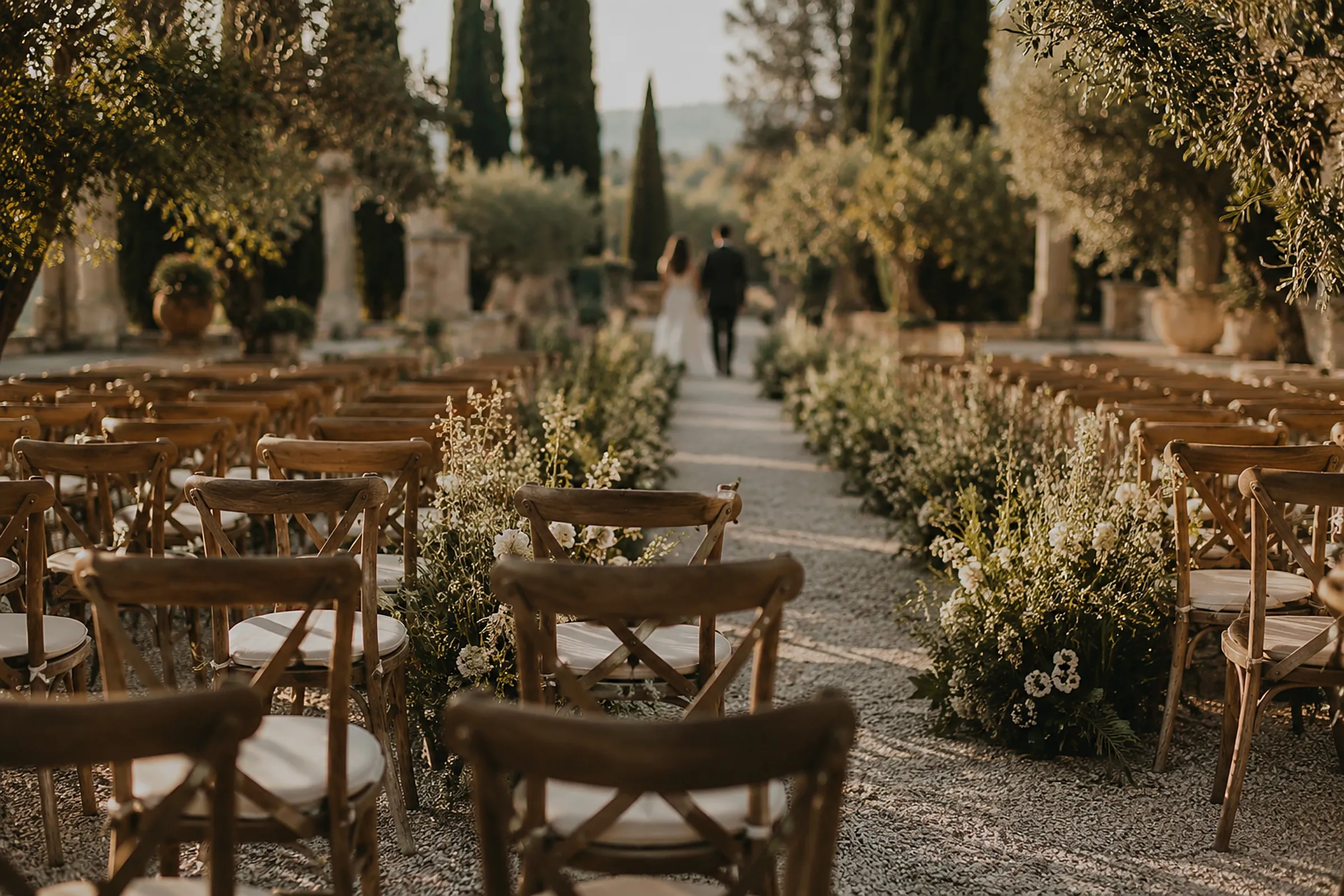
A menu, an escort card, and a ceremony sheet are not simply things to read. They are the first small objects guests learn the day through.
At the fictional print table for this story, the first menu is rejected because it makes a noise. It is not a dramatic noise. When the paper is folded, it gives a crisp, dry snap that feels too brittle for the rest of the room. The dinner is meant to have limestone, graphite cloth, smoked glass, and fruit with skins you can see. The paper is bright white, smooth, and eager to perform its perfection. It looks expensive. It also looks like it has never been held.
The printer has several offcuts spread across a plank table: one soft cream sheet with a tooth you can feel through a fingertip; one very pale grey board; one almost-transparent insert; one heavy cotton sheet with a torn deckle. The vocabulary of paper can become too precious too quickly, so the group avoids adjectives at first. They make objects. A menu from each sheet. An escort card from each. A short ceremony page folded once, then held at an imaginary standing ceremony. The material becomes legible when it is asked to do its actual job.
First, decide how the piece will be used.
A ceremony card must survive being held in one hand while a glass, coat, or child occupies the other. A menu sits next to food, sauce, water, and elbows. An escort card needs to be found quickly in a crowd, then perhaps carried across a room. These uses are not obstacles to good design; they are the beginning of it. The menu that is beautiful only when untouched has not answered the question. The escort card that is so small it disappears into a cluster of flowers may be elegant on a table and unkind at the moment someone needs it.
The group makes the menus too large at first. They are generous rectangles, intended to feel like a small edition. On the place setting, they cover the plate and compete with the napkin. On a lap, they bend. In a hand, they become awkward. The size is reduced by a few centimetres, then reduced again. The final piece has enough presence to hold a meal, enough margin to breathe, and a narrow vertical proportion that lets it sit beside a plate rather than on top of one. It has become quieter and more useful at the same time.
Then, test a fold.
A paper’s grain is not a decorative idea. It is the direction in which the fibres settle as the sheet is made, and it affects how a fold behaves. You do not need a technical education to work with this. Take a sample. Fold it one way, then rotate and fold it again. One fold will often look softer and cleaner; the other may resist, crack, or bulge. The page is telling you which direction it can comfortably become a booklet, a tent card, an envelope, or a wrap. Listen before ordering a hundred of them.
In this fictional workshop, the first ceremony cards are folded across the wrong direction. The crease develops a fine broken line. It is not ugly, exactly, but it makes the object feel tense. The printer changes the page direction. The new fold is not visibly more glamorous. It is simply at ease. The paper closes without being forced. This becomes one of the private rules of the suite: the materials must not look as if they are working harder than the guests are.
Surface is an argument about light.
Smooth coated paper can make colour look dense and sharp. Uncoated paper takes ink differently; edges may soften, dark areas may sit more deeply, and a small amount of pressure or warmth from a hand can become part of the object’s life. Neither is morally better. But the same words will not behave the same way on both. If the room contains a lot of gloss—glassware, polished cutlery, wet flowers, a lacquered floor—a paper with some tooth can provide relief. If the room is full of rough texture, a cleaner surface may keep the printed information from becoming another layer of visual noise.
The menu for this dinner ends up on a warm, uncoated sheet. The ink is a near-black rather than pure black, with a small note of rust used only for the course divider. The choice is not a brand statement. It is an answer to the plate, the cloth, and the after-dark lighting. On the table, the paper does not shout. When a guest picks it up, the edge has enough fibre to make the moment feel physical. The design has moved from appearance into touch.
What should happen after reading?
This question separates an invitation from a receipt. A good wedding paper object can have a second life without being dressed up as a souvenir. The ceremony sheet can become a bookmark because the fold makes it easy to keep. The menu can carry the names of the dishes and also create a record of an unusual meal. A place card can be the small evidence that somebody expected a particular person at a particular table. The object does not need to demand preservation. It only needs to be worth not throwing away immediately.
That worth is often produced by restraint. The fictional couple in this issue nearly adds a three-part insert, a wax seal, a ribbon, and a second card to the menu package. On the table, it becomes a little pile. The server has nowhere to put it when the first course arrives. The wax seal leaves a mark on the linen. The ribbon catches on a glass. The team removes the extras. The final menu is a single folded sheet with a blind impression at the bottom edge: not a logo, just a faint line that gives the thumb a place to land. It is less elaborate. It is more itself.
A useful paper brief
Before a design is final, make a brief that includes the information normally omitted from a moodboard. Name the room and the hour in which the piece will be seen. Name what it will sit beside. Name how many hands will pick it up, whether it will be folded, whether it will travel, and whether anyone needs to read it in low light. Name what happens after the guest has read it. Finally, name the labour: who is packing it, carrying it, placing it, and collecting the extras. A suite that is beautiful in a proof box but punishing at setup is not fully designed yet.
Paper keeps a body’s memory because it records contact. It remembers the edge of a thumb, a soft fold, a drop of water, the place it was slid under a coat strap at the end of a night. The important choice is not whether it is luxurious. The important choice is whether it knows what it is there to hold.
Material note: No printer or stationer is represented here. The workshop and its decisions are fictional.
Filed under
This story is part of the permanent collection of Aura Stories — yours to return to, always.
The Issue
The Issue. Twelve weddings a year, in your inbox.
One dispatch a month — the weddings, the makers, the taste behind them. No spam, leave whenever you like.
The conversation
Comments
No comments yet. Be the first to write one.
Sign in to comment